




Newport’s story begins long before canals, pontoons and landscaped parks defined its edges. Once a stretch of low-lying grazing land, the area was known as much for cattle as it was for crabbing along the mudflats. Locals would walk out across the shifting ground, setting pots in an environment that changed with the seasons.
Tides regularly reshaped the boundary between mangroves, saltmarsh and paddocks, making it a place that was never quite fixed. Today, that same landscape has been carefully engineered into a residential community where water is no longer unpredictable—but it remains central to everyday life.
Water as part of the daily rhythm
In Newport, access to water isn’t reserved for weekends. It’s built into the rhythm of daily routines. Walking paths follow canal edges, parks sit beside the lake, and streets naturally lead towards open views and breezes.
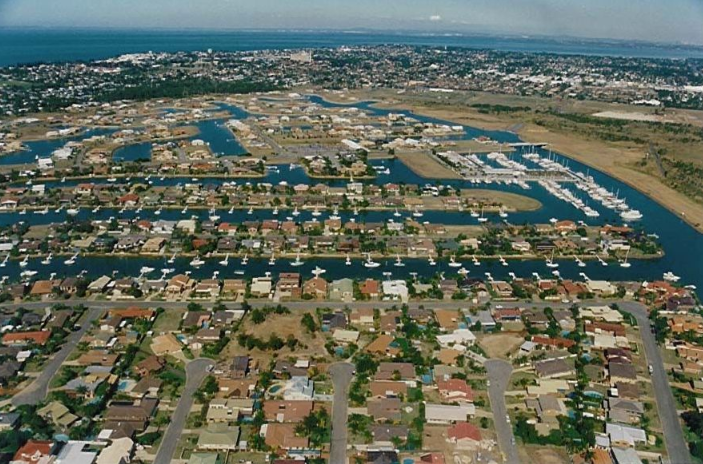
Photo Credit: Moreton Bay Region Libraries – Our Story/RLPC-001\001231
Rather than a constant “holiday” feel, the lifestyle here is shaped by small, repeatable habits. Residents take short walks in the morning or at dusk, bring children to nearby parks after school, or step outside briefly because the environment invites it.
These low-effort moments matter. Over time, they become routine—and it’s within those routines that community begins to take shape.
Familiar faces and shared spaces
When people use the same paths at similar times, familiar faces begin to appear. A nod becomes a greeting; a greeting becomes a conversation. While no place can guarantee connection, Newport’s layout increases the likelihood of these small, repeated interactions.
At the centre of this pattern is the lake, a defining feature that supports simple, everyday activities—walking, cycling, sitting, and watching children play. Because these activities require little planning, they’re easy to repeat, helping to build a sense of familiarity over time.
A connected network of waterways
Beyond the lake, Newport’s canal system extends the presence of water throughout the suburb. Rather than acting as a single focal point, it forms a network that shapes how residents move and experience the area.
Water becomes part of the backdrop—visible from streets, accessible from parks, and woven into daily movement. This continuous presence influences how people spend their time, often encouraging them outdoors more frequently.
Shared access for a broader community
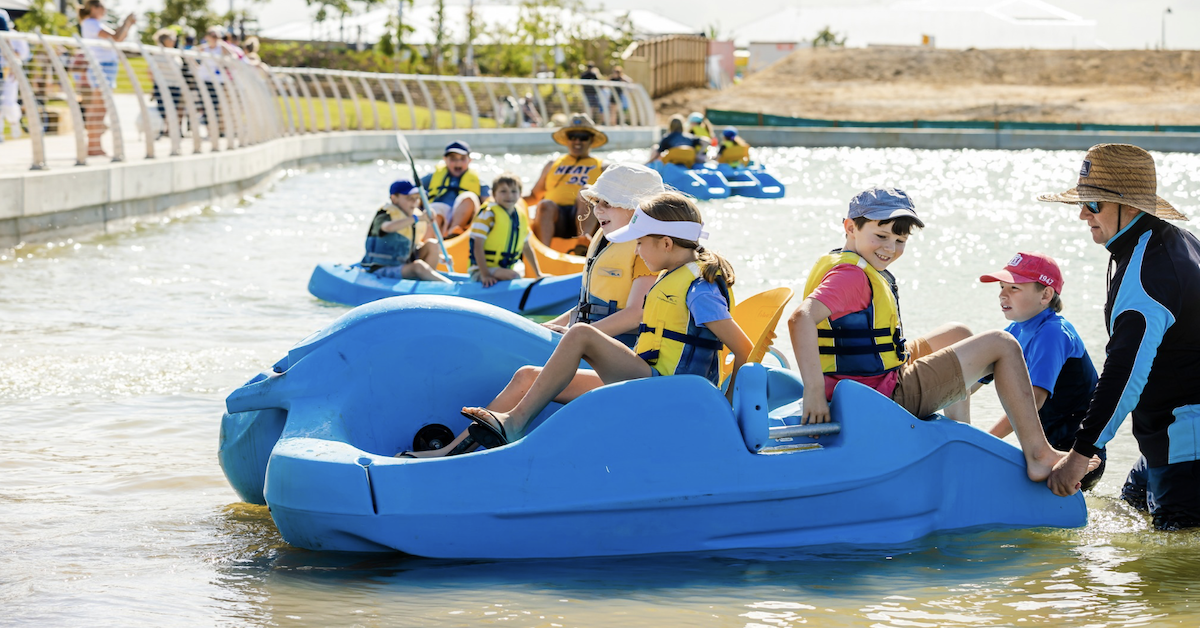
Public spaces play a key role in making this lifestyle accessible. Spinnaker Park provides shared water access alongside playgrounds designed for children of different abilities, as well as launch points for kayaks and paddleboards.
These features help bring together a mix of residents for similar activities at similar times. Rather than functioning as a destination, the park becomes a regular meeting ground—supporting casual interaction and a stronger sense of neighbourhood familiarity.
Identity shaped by environment and history
Newport’s identity is reflected in its details. Canal names, chosen by residents in the late 1980s, follow a theme of Australian coastal birds such as pelican, jabiru and sandpiper. Street names, meanwhile, draw from yachts that competed in the America’s Cup, linking the suburb to a broader maritime heritage.
This combination of environmental and historical references gives the area a layered character, reinforcing its connection to both water and coastal culture.
Living with water awareness
Living close to water naturally increases awareness of the environment. Weather patterns, tides and light conditions become more noticeable when they are part of the immediate surroundings.
Even for those who don’t actively use the canals, this awareness can influence daily decisions—when to walk, when to sit outside, or when to head to the park. It’s a subtle but consistent connection that shapes how residents engage with their surroundings.
Parks as everyday gathering places
Local parks further support Newport’s community life. Newport Park offers practical amenities including play equipment, open space, and areas for dogs, encouraging people to stay longer rather than simply pass through.
These spaces become part of daily routines—places where children play, neighbours meet, and social connections gradually form.
A community built through repetition
In Newport, community is not defined by a single feature or event. It develops through repetition and shared experience. Water plays a central role, but it is the way residents interact with it—regularly, casually, and often without planning—that shapes the suburb’s character.
Over time, small moments—walking a familiar path, recognising familiar faces, pausing by the water—build a sense of belonging. It’s not something dramatic or immediate, but something that grows steadily, becoming part of everyday life.
Photo Credit: Newport Waterside/Facebook