Saturday, June 6, 2026 (Moreton Bay Central Sports Complex / Red Rooster Park 1) – Bond University QAFLW – Women – Round 8 • Moreton Bay QAFLW Seniors 36 | Maroochydore QAFLW Seniors 28
FQPL1
Saturday, June 6, 2026 (Moreton Bay Sports Complex (Caboolture Sports FC)-Field 1) – FQPL1 – Men – Round 14 • Caboolture Sports FC 1 | Ipswich FC 2
NPL
Friday, June 5, 2026 (Heath Park (Eastern Suburbs FC)-Field 1) – NPL – Men – Round 14 • Eastern Suburbs 0 | Moreton City Excelsior 0
Saturday, June 6, 2026 (AIS Arena (Rochedale Rovers FC)-Field 1) – NPL – Men – Round 14 • Rochedale Rovers 0 | Peninsula Power 2
HART Premier Netball League (HPNL)
Sunday, June 7, 2026 (Nissan Arena-Court 3) – HART Premier Netball League (HPNL) – Women – Round 5 • Gold Coast Titans Netball Ruby 77 | Moreton Bay City Pulse Ruby 56
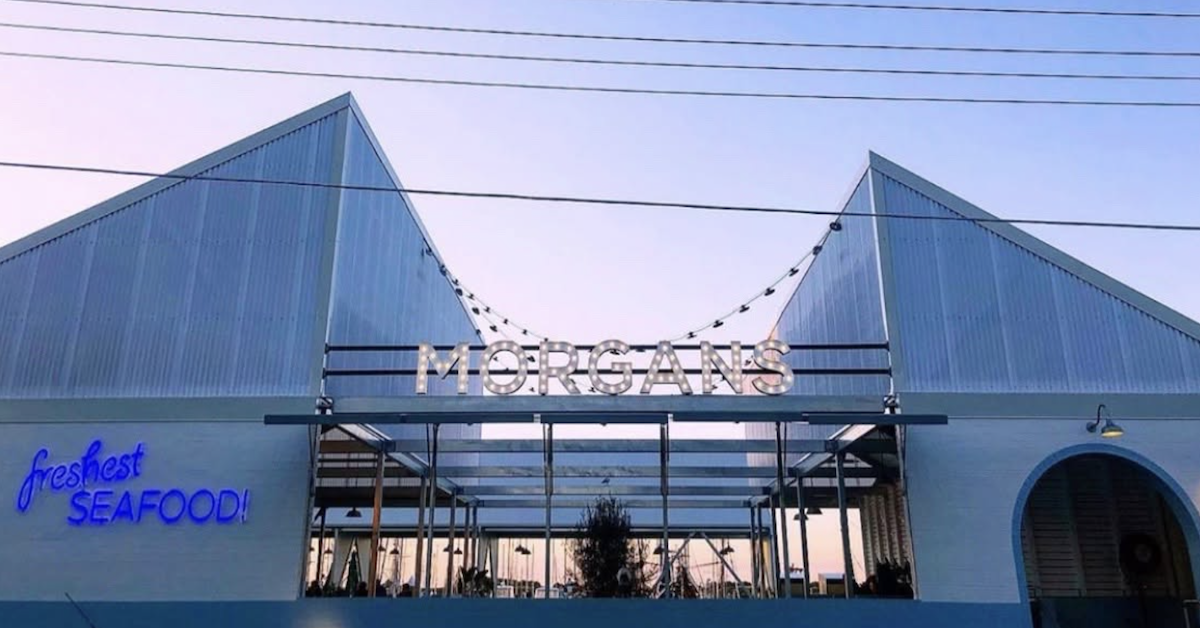
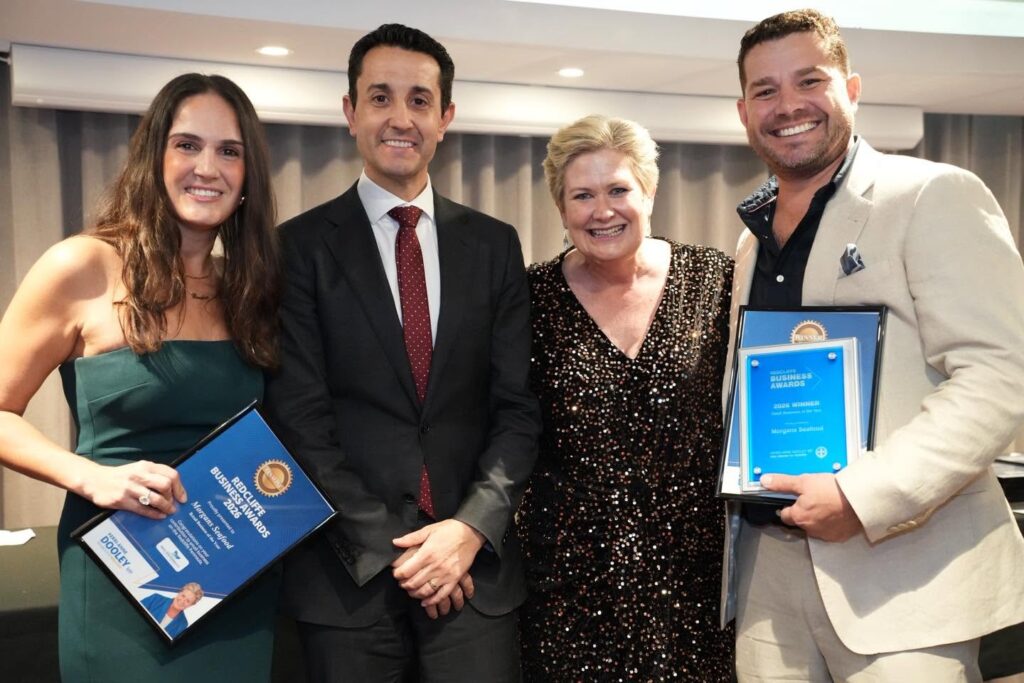
One of Scarborough’s best-known businesses has been recognised among the region’s leading enterprises, with Morgans Seafood taking out the Redcliffe Business of the Year Award at the 2026 Redcliffe Business Awards.
The awards were presented on 28 May at The Komo in Redcliffe following a program that attracted 164 nominations across 10 categories. Hosted by the Redcliffe Peninsula Chamber of Commerce and State Member for Redcliffe Kerri-Anne Dooley, the awards celebrate businesses that contribute to the economic and community life of the peninsula.
For Morgans Seafood, the recognition adds another chapter to a business that has become closely linked with Scarborough’s waterfront identity.
A Business Built Around Seafood and Tourism
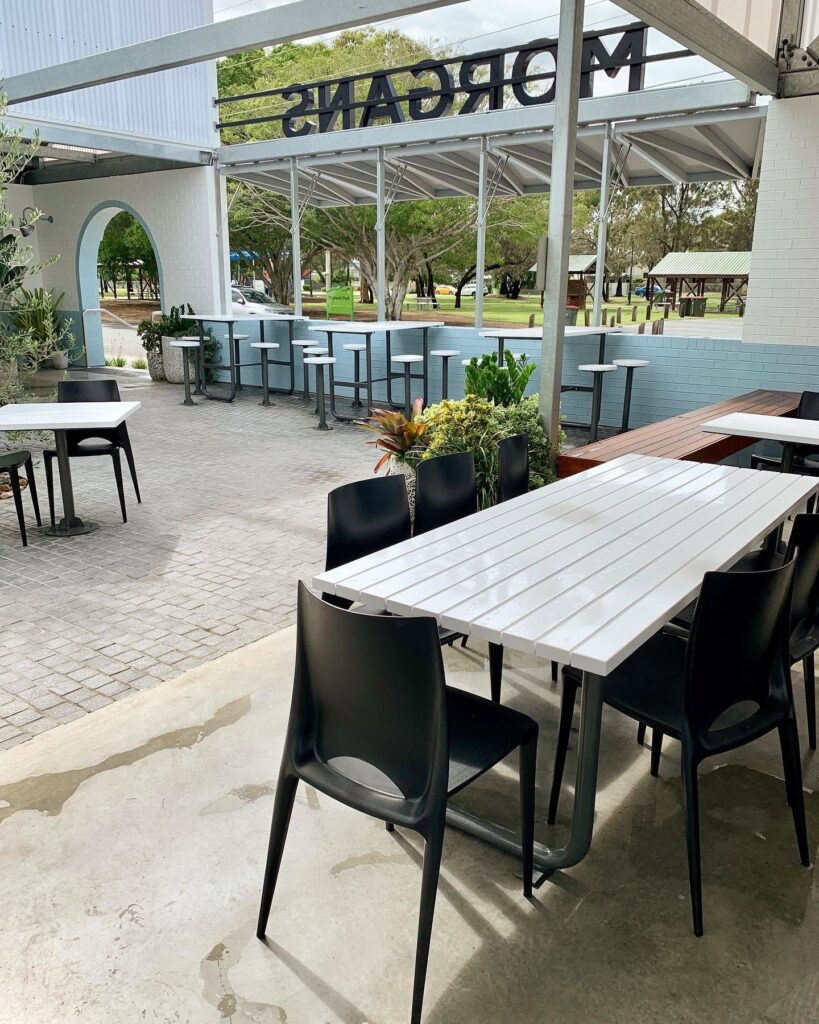
Located on Bird O’Passage Parade overlooking Moreton Bay, Morgans Seafood has grown from a local seafood retailer into a destination that attracts visitors from across South East Queensland.
The business combines a fresh seafood market, takeaway service and dining experiences centred on locally sourced seafood. Over the years, it has become a regular stop for tourists exploring the Redcliffe Peninsula while remaining a familiar name for local residents.
Its location near Scarborough Harbour has helped position the business as part of the area’s tourism offering, contributing to visitor spending and supporting the local economy.
The Redcliffe Business Awards were established to recognise the dedication, innovation and resilience of small businesses operating across the peninsula. Award organisers said the program aims to showcase businesses that strengthen the local economy and inspire others through their achievements.
Morgans Seafood was selected from a field of nominees spanning industries including tourism, retail, hospitality, trades and community services. The judging panel included Jodie Morphett from The Guides, Lawrence Gow from the Redcliffe Peninsula Chamber of Commerce and Gavin Daw from Bendigo Community Bank Margate.
While individual category winners represented communities across the peninsula and surrounding areas, Morgans Seafood was the sole winner from Scarborough.
A Familiar Name on the Peninsula
Scarborough has long been associated with the fishing and boating industries, and businesses connected to the waterfront remain an important part of the suburb’s character.
Morgans Seafood’s success reflects that connection. Through its focus on seafood retailing, hospitality and visitor experiences, the business has helped promote Scarborough as a destination while supporting local employment and economic activity.
The award comes at a time when many small and family-owned businesses continue to face economic pressures. Organisers noted that the awards were designed not only to recognise success but also to celebrate the contribution local businesses make to the wider community.
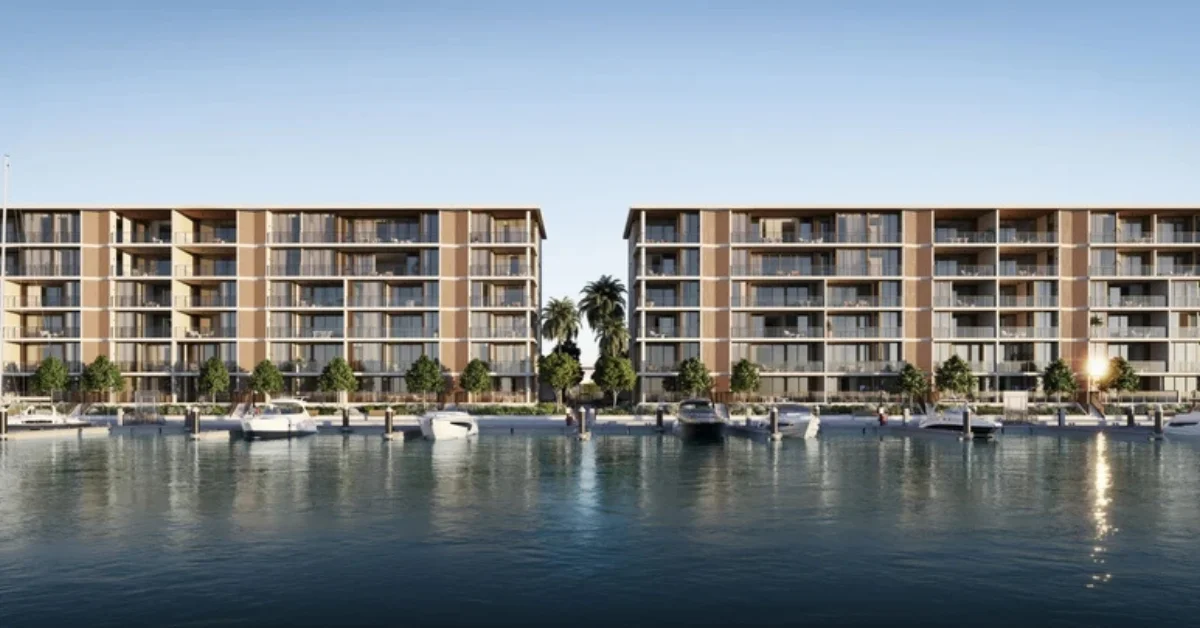
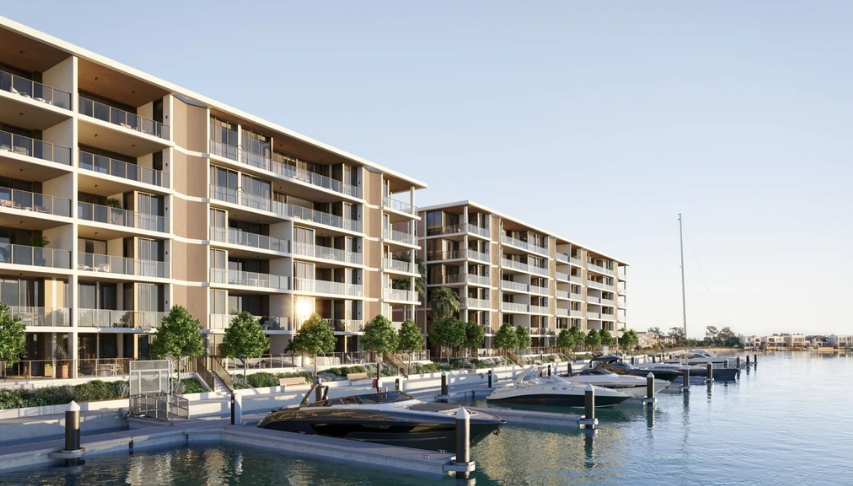
The sell-down leaves only a handful of apartments, penthouses, and garden villas available at what the developer describes as Newport’s final waterfront address. Lighthouse Newport sits at 21 Lighthouse Esplanade and overlooks a private residents’ marina with direct access to Moreton Bay.
The development, by Traders In Purple, comprises 132 dwellings across two buildings named Palm and Dune, offering a mix of apartments, townhomes, penthouses and villas.
Photo credit: lighthousenewport.com.au
Construction is progressing well, according to the developer, with first residents expected to move in by mid-2027.
What remains on the market includes waterfront two-bedroom plus multipurpose room apartments from $1.4 million, three-bedroom apartments from $1.37 million, waterfront three-bedroom apartments from $1.64 million, waterfront penthouses from $1.995 million, and three-bedroom garden villas from $1.35 million.
The project was designed by architecture firm Rothelowman, whose brief centred on what the practice describes as designing from the inside-out. Residences feature open layouts, floor-to-ceiling glazing and balconies or private courtyards, with some units capturing views toward the Glass House Mountains.
Photo credit: lighthousenewport.com.au
Shared amenities include two pools, a residents lounge, tropical landscaping and community herb gardens. Boating enthusiasts with access to a marina berth, subject to availability, can head out directly onto Moreton Bay. Residents will also have access to cafes and restaurants at Newport Marketplace.
Lighthouse is Traders In Purple’s 15th project on the Peninsula, according to the developer. The group states it has a 100 per cent completion rate across more than 20 years of delivering residential projects along Australia’s eastern seaboard. The developer markets this completion record as a point of difference for prospective buyers.
For those still weighing up their options, Traders In Purple operates a sales display at Newport Marketplace, featuring a full-sized kitchen and ensuite along with interactive high-definition displays showing the finished product. More information is available at lighthousenewport.com.au.
With more than 90 per cent of the 132 dwellings sold and construction under way, few options remain for buyers seeking a waterfront position at Newport.
Devastating for the Maroons at Accor Stadium in Origin I.
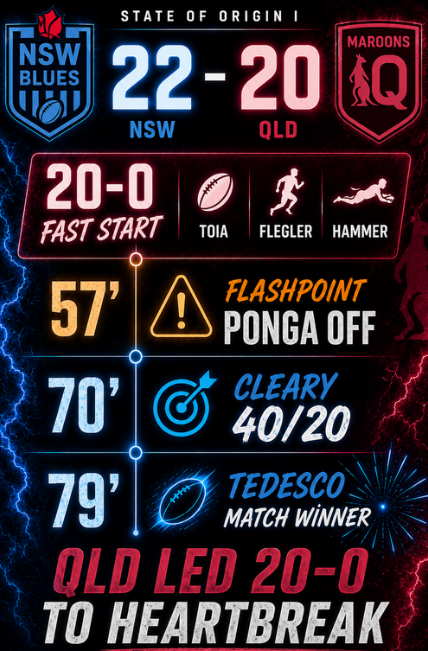
Kalyn Ponga’s sending off in a decision that immediately sparked controversy proved an enormous turning point. Andrew Johns was critical of the decision during commentary. It swung hard-fought momentum against Queensland, and the Blues produced an extraordinary final-minute play, with James Tedesco catching, juggling and grounding Nathan Cleary’s bomb.
For much of the night, Queensland looked in control.
Not just ahead on the scoreboard — in control of the contest itself. Their line speed was sharp, their middle forwards were winning collisions, Harry Grant was asking questions around the ruck, and Sam Walker, on debut in the most pressurised arena the game can offer, looked remarkably composed.
Then Origin did what Origin does.
It twisted.
A night that had looked set to become a major statement for Billy Slater instead became a brutal lesson in how quickly interstate football can turn when momentum shifts and belief takes hold.
Queensland led 20-0 after 20 minutes. They were still 20-6 ahead deep into the second half. And yet somehow, they walked away beaten 22-20.
That is the sort of loss that lingers.
Queensland Landed Every Early Blow
If there were doubts about Ponga getting the nod over Reece Walsh, or whether Walker was ready for this level, Queensland answered them quickly.
Robert Toia struck first in the ninth minute after early pressure forced the Blues into errors, and Walker converted.
It got worse for New South Wales from there.
Thomas Flegler, all aggression and direct running, punched through in the 14th minute after Queensland had started owning the middle. Selwyn Cobbo had already done damage with a strong carry in the lead-up, and the Blues suddenly looked rattled.
A few minutes later, Hamiso Tabuai-Fidow crossed as Queensland continued to punish sloppy New South Wales football.
Walker never missed.
By the time he added a penalty goal in the 20th minute, the Maroons were 20-0 up, and Accor Stadium had gone from loud to uneasy.
Queensland weren’t just scoring. They were dictating the terms.
Munster was playing direct. Grant was probing. Tino Fa’asuamaleaui and Flegler were bending the line. Even defensively, the Maroons looked connected and aggressive.
At that point, it genuinely felt like the Blues were in serious trouble.
New South Wales Hang Around
Origin, though, rarely gives you a clean night.
Hudson Young’s try in the 27th minute finally gave the Blues something tangible to work with, trimming the margin to 20-6 after Cleary’s conversion.
Even then, Queensland still looked the more settled side.
They defended repeat pressure well enough and took that lead into half-time without looking especially rattled. But if you were watching closely, there were hints the game was changing shape.
The Blues had started to spend more time in Queensland territory. Their attack still lacked polish, but the game had become less comfortable than the scoreboard suggested.
And once that happens in Origin, strange things tend to follow.
The Turning Point That Changed Everything
The defining moment came just before the hour mark.
Ponga was sent off for a shoulder charge in a decision that immediately lit up debate.
Whether you agreed with it or not, the practical effect was obvious. Queensland suddenly had to survive a critical passage under enormous pressure, a man short, against a side that had finally found some rhythm.
The Blues took advantage.
Ethan Strange crossed in the 62nd minute after Stephen Crichton’s break opened the Maroons up, although Cleary’s missed conversion meant Queensland still had breathing room at 20-10.
But the feel of the match had changed completely.
The crowd sensed it. The Blues sensed it. Queensland, perhaps, sensed it too.
Cleary’s 40/20 in the 70th minute was the moment the pressure became suffocating. It was a champion’s play, the kind that flips field position and emotional momentum in one strike.
Seconds later, he backed it up by slicing through himself.
20-16.
Now the Maroons were no longer managing a lead. They were trying to survive.
Queensland Let The Game Slip
The temptation will be to make this all about the Ponga send-off.
It was enormous. Lose a player in Origin, against a side with Nathan Cleary pulling the strings, and the pressure changes instantly.
But Queensland still had chances to steady themselves.
Instead, just when composure mattered most, the mistakes crept in.
Robert Toia lost the ball. Harry Grant conceded a costly penalty. Selwyn Cobbo came up with an error. Jojo Fifita spilled possession.
None of those moments, on their own, decide a match.
Together, though, they handed New South Wales exactly what it needed — territory, repeat sets, and belief.
That’s how these games can turn. Not always in one dramatic flash, but in small moments where control slips away and suddenly the team chasing starts to smell something.
By the time Cleary launched that final bomb, Queensland no longer looked like a side closing out a win. They looked like a side trying desperately to survive.
And when Tedesco somehow came down with it — juggling, regathering, grounding — it felt like the kind of moment Origin keeps in its vault for years.
Queensland will argue the turning point. They’ll replay the send-off. They’ll point to what might have been.
But the harder truth is this: they had this game.
And they let it get away.
MATCH PREVIEW
Published 26-May-2026
Origin Opener Set For Sydney Showdown As New-Look Maroons Eye Early Blow
The first round of Origin is here.
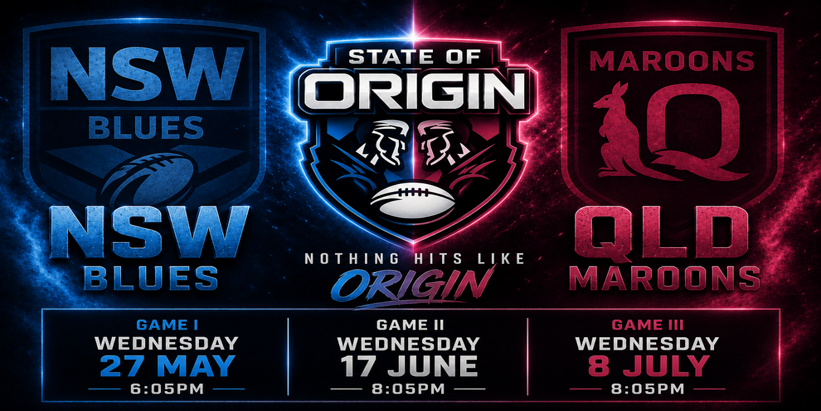
For 2026, State of Origin starts at Accor Stadium in Sydney, before heading to the MCG for Game II and Suncorp Stadium for the decider.
The 2026 State of Origin series is the 45th edition of the men’s interstate best-of-three rivalry, with Queensland entering the campaign holding the historical edge — 25 series wins to New South Wales’ 17, with two series drawn.
For the Maroons, Kalyn Ponga has been selected over Reece Walsh by Billy Slater, while Sam Walker makes his Origin debut in place of the injured Tom Dearden. Max Plath debuts, with Jojo Fifita and Briton Nikora earning their first Maroons selections.
For the Blues, James Tedesco keeps Dylan Edwards out at fullback, while Laurie Daly has opted for Tolutau Koula out of position on the wing ahead of Zac Lomax and Jacob Kiraz. Injury to Mitchell Moses means Ethan Strange will start, while Addin Fonua-Blake finally gets his Origin debut.
The Maroons have won only two of their past 10 Origin games in Sydney, although one of those victories came last year.
Can Queensland pressure Strange enough to cut off quality ball to Nathan Cleary?
New South Wales appears to hold the upper hand through the middle, but Pat Carrigan and Tino Fa’asuamaleaui will relish that challenge.
Cleary versus Walker. Strange versus Munster.
Can Harry Grant put the Maroons on the front foot with his creativity around the ruck?
Can Max Plath and Hamiso Tabuai-Fidow reproduce their Dolphin’s NRL form on the Origin stage?
This shapes as a classic Origin arm wrestle, with Queensland having won six of the past 10 series.
The game will be broadcast live on 9Now, with kick-off at 8.05pm.
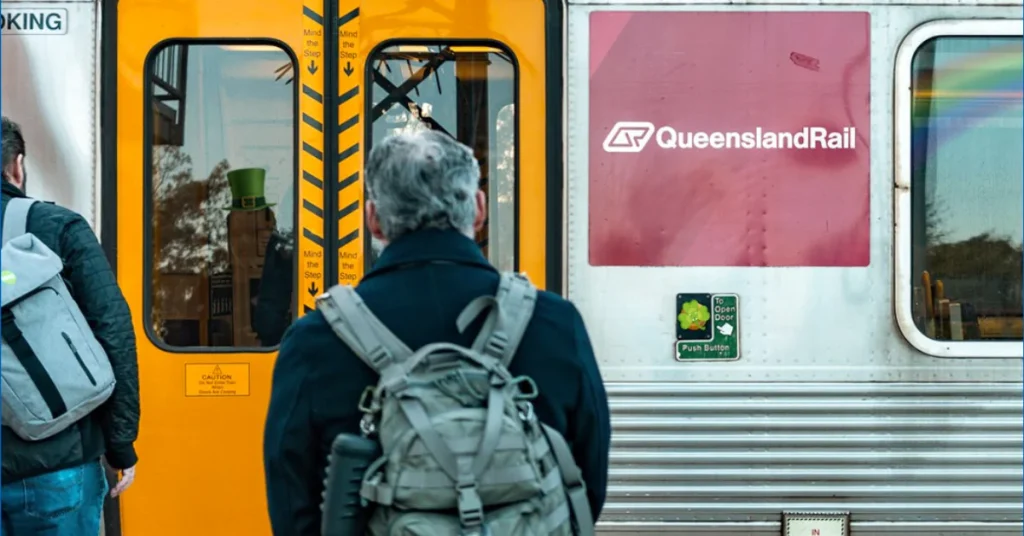
Many Newport commuters who rely on trains via Kippa-Ring and Rothwell stations are being urged to prepare for longer travel times, with Queensland Rail set to introduce a reduced weekday timetable across South East Queensland.
Newport Connections Set To Feel The Impact
While Newport does not have its own train station, many residents regularly use nearby Kippa-Ring and Rothwell stations before connecting by bus or car to reach home.
Those journeys could become more complicated from Tuesday, 5 May, when Queensland Rail moves to a temporary reduced timetable due to protected industrial action.
The Redcliffe Peninsula line, which serves both Kippa-Ring and Rothwell, is among the affected routes. Under the revised schedule, weekday services will operate more like a Saturday timetable, with fewer trains running throughout the day.
Additional services will operate during the morning and afternoon peaks, but passengers are still being advised to allow extra travel time and expect busier trains.
Across the wider South East Queensland network, 273 weekday train services are scheduled to be removed from the timetable.
Fewer Trains, More Planning
For Newport residents travelling to and from Brisbane, the biggest change is likely to be reduced service frequency.
During peak periods, Redcliffe Peninsula line services are expected to run every 15 minutes. Outside peak times, trains will generally operate every 30 minutes.
For commuters who rely on bus connections from Kippa-Ring or Rothwell to reach Newport, longer gaps between trains could also mean longer overall journey times if connections are missed.
Queensland Rail has also advised that some services will operate as three-car trains until further notice, potentially leading to increased crowding during busy periods.
Passengers are being encouraged to consider travelling earlier or later where possible.
Check Before You Travel
TransLink is advising passengers to check journey details before leaving home, with the online journey planner updated to reflect the revised timetable.
For Newport residents who regularly combine train and bus travel, checking connections ahead of time may help avoid unexpected delays and missed transfers.
The reduced timetable is expected to begin on Tuesday, 5 May and remain in place until further notice.
Newport’s business and community leaders are being urged to step up this winter, with the 2026 Vinnies CEO Sleepout set to shine a spotlight on homelessness — an issue increasingly felt across Moreton Bay.
The annual event will take place on Thursday 18 June, with the Brisbane sleepout staged at Roma Street Parklands, where participants will spend the night outdoors to raise funds and awareness.
One night out, a much bigger problem
The Sleepout has become one of the country’s most visible fundraising efforts, bringing together CEOs, business owners and community figures willing to trade comfort for a single night to better understand what thousands of Australians face every day.
More than 122,000 people are currently experiencing homelessness nationwide, according to the latest Census — a figure that has been trending upward in recent years.
Organisers say the aim is not just to raise money, but to push the issue back into public focus.
The reality closer to home
While homelessness is often associated with capital cities, support services say demand is rising across suburban and coastal communities — including the Moreton Bay region.
That includes people who may not fit the traditional image of homelessness: families, older Australians, and those in work but unable to secure stable housing.
Local services connected to St Vincent de Paul Society National Council continue to provide frontline support, from emergency accommodation to food and financial assistance — but say pressure on services remains high.
More than two decades of fundraising
Since launching in 2006, the Vinnies CEO Sleepout has raised close to $110 million nationally, supporting thousands of people with accommodation, meals, clothing and case management.
Last year alone, more than 1,500 leaders took part, raising over $9.4 million.
This year’s event comes amid warnings that homelessness numbers could climb further, with cost-of-living pressures and housing shortages continuing to bite.
A call for Newport to get involved
For Newport’s business community, the message is simple: participation matters.
Whether it’s taking part in the sleepout or supporting those who do, organisers say the collective effort helps fund critical services — and keeps attention on an issue that is far from solved.
The Sunday morning show provides a fantastic journey around Australia and the world to hear stories and insights from real people that you won’t hear in the mass media.
Here are five nuggets that we’ve dug out from the goldmine that is Macca’s Australia All Over show.
Lawson’s Story
On March 22, we heard the story of a 10 year old boy called Lawson, from the persepctive of a first responder.
The first responder who rang was Mark, a paramedic. He had been called out in an ambulance to a rural property at Mcdouall Peak Station in remote South Australia.
McDouall Peak is known for its arid desert landscape and historic links to explorer John McDouall Stuart. The area is known for its harsh conditions, hardy desert vegetation, and remains part of South Australia’s vast, sparsely populated interior.
Mark related that a 10-year-old boy named Lawson and his dad, a farmer, went out on motorbikes to build some fencing on the station. Lawson’s dad told the boy that he was just going to check some fencing a few kilometres away and then set off on his motorbike down the fenceline.
He didn’t come back.
After a while, Lawson got on his motorbike to go and look for him, but couldn’t find him. So he got his mum to drive over in the car and together they searched and found him. The dad was very badly injured having crashed on his bike at speed.
By the time emergency crews arrived, Lawson had already spent more than an hour talking with medical staff and waiting for help to reach them.
Mark the paramedic related that on arrival on the main road, he encountered young Lawson, who calmly then got in a ute and drove ahead of the ambulance for several kilometres to guide the medics to where his dad was.
Mark was blown away with the maturity and initiative of Lawson. He had seen many unusual situations in his job but this was a major outlier.
It turned out Lawson’s father had broken a leg, hip and collarbone.
Mark said Lawson carried medical gear; helped responders where needed; and stayed composed through the entire rescue until his father was flown out by the RFDS for treatment.
Amazingly, a neighbour who knew young Lawson was listening to Macca, and rang Lawson’s family to tell him about the call on the show.
Soon after, Lawson rang in and told Macca all about what happened first-hand.
“He was going like 90 or 100 or something,” Lawson told Macca, when recounting his father’s crash.
At one point, Macca asked him what he wanted to be when he grew up.
“A helicopter pilot,” Lawson replied.
It sounded less like a dream and more like a plan.
Out on stations like McDouall Peak, childhood looks different.
Distances are measured in hours, not suburbs. Fence lines run for kilometres. If something goes wrong, help is rarely close.
Lawson studies through the Port Augusta School of the Air, originally built around two-way radio lessons for children living in isolated parts of the country. These days, classes are mostly online, but the principle is still the same — students learning from station houses and remote properties hundreds of kilometres apart.
Kids in those areas tend to grow up fast and early. They learn vehicles young, help with fencing and stock work, and get used to solving problems without immediate backup.
Here’s a video about Clair, who tells a story remarkably similar to that of Lawson, giving us a glimpse of the world they inhabit — a long way from city life, and built around a different kind of independence.
Food Labels – Does “Australian Made” have loopholes?
Judy, a soybean farmer from Bundaberg, rang in to the show on the April 5 program.
She had a very interesting story to put people straight about Australian made loopholes.
She said that supermarket food labels can be very misleading.
Soy milk can be sold as “Australian Made” even when the beans are imported — because the bulk of what’s in the carton is Australian water.
That’s enough to be considered “Australian Made” soy milk, she said.
Meanwhile, she’s growing soy locally, rotating it with sugarcane — a system that quietly does its job, improving soil and keeping things sustainable over time.
“It’s a practical system,” she said.
But that work — and those crops — aren’t always what ends up on the shelf.
It’s not just soy milk.
More broadly, Australia’s labelling rules are based on where a product is made or substantially transformed, not always where its key ingredients are grown.
That’s how you end up with:
fruit juice blended locally from imported concentrate
seafood processed here but caught overseas
packaged foods made in Australia using global ingredients.
The label is technically right, but it doesn’t always tell the full story. For producers like Judy, that gap matters.
Are these technical loopholes hurting Australian food producers?
“Six days. 1,200 feral pigs.” The scale most people don’t see
On the April 19 program, Peter called in from Wangaratta, talking about his new feral pig shoot record.
Feral pigs can make an enormous mess of farmer’s crops as well as gardens and any piece of grassland as they can dig up hundreds of metres of land overnight looking for worms and roots.
Peter projected that there could be over a million feral pigs in Australia and that there were signs of them entering the edge of urban areas.
It sounded like Peter was part of a system that pairs landholders with vetted recreational shooters. His previous best was 1,100 shot but this time he covered 1,200.
Scientific evidence ranks pigs among the most intelligent animals—often cited as the fifth smartest species—possessing cognitive abilities that rival dogs and young human toddlers.
Feral pigs have been part of the landscape for a long time. What’s easy to miss is how quickly things escalate once numbers build.
They move in groups, breed fast, and don’t take long to undo a paddock. Crops gone overnight, fences pushed through, water turned.
Control efforts don’t stop — trapping, baiting, culling — but it’s not static.
Six days near Warren. About 1,200 feral pigs. At that point, you’re dealing with something that doesn’t scale down easily.
Corals, Reefs and the Arguments Around What We’re Seeing
Three separate calls across April ended up circling the same uneasy question: what is happening to the reefs?
What made it interesting was that the callers did not entirely agree.
The Scientist Trying to Cool the Water
On the April 5 program, oceanographer Dan Harrison from the National Marine Science Centre spoke about the science side of the problem — and how researchers are now exploring increasingly complex ways to protect coral systems from extreme heat.
One idea he discussed was marine cloud brightening.
In simple terms, increasing low cloud cover over parts of the ocean so more sunlight is reflected away and water temperatures stay lower during dangerous heat periods.
But Harrison was careful not to present the reef as a simple story of decline or rescue.
Cyclones can damage reefs badly — but sometimes also cool overheated water and reduce bleaching pressure. Floods can smother coral systems with runoff, but under different conditions can shift temperatures or nutrients in ways that change outcomes entirely.
The impression left was less about certainty than complexity.
Nothing in reef systems happens in isolation.
Returning to Fiji After Three Decades
Two weeks later on the April 19 show, Kieran Kelly rang from Fiji with something far more personal and emotional.
After returning to diving for the first time in more than 30 years, he said he was stunned by what he saw underwater.
“The reefs were devastated — brown, lifeless.”
What stayed with listeners was the way he described it.
“All the little houses are still there, but there’s no one in them.”
He said the coral structure itself often remained, but the colour, fish life and movement felt diminished from what he remembered decades earlier.
At the same time, he reflected on how Fiji itself had changed — from what he described as a quieter, more remote place into one increasingly built around tourism, boats and constant movement.
“The very thing that attracts people ends up spoiling it.”
It wasn’t framed as activism or politics. More the observations of someone returning to a place after a very long absence and confronting how much both nature and people had changed.
The Ecologist Who Warned Against Generalisations
A week later again, on the April 26 program, another listener pushed back.
James Hawes, a retired CSIRO ecologist from the Sunshine Coast, wrote to Macca after hearing Kieran’s comments.
He argued that broad claims about “dead and dying reefs” risked missing important context.
Hawes said many reefs he had snorkelled recently — including parts of the Great Barrier Reef and reefs around Fiji — appeared healthy and actively growing. He acknowledged localised storm and cyclone damage, but warned against sweeping conclusions drawn from isolated experiences.
“Reports on coral reef damage must have context.”
Why reef conversations have become so complicated
Part of the reason reef discussions now feel so contested is because people are often talking about different parts of the same system.
Some reefs recover after bleaching events. Others don’t. One section can be badly damaged by heat or cyclones while another nearby remains comparatively healthy.
That sat underneath all three calls.
Dan Harrison spoke about intervention research already underway in Australia. Kieran Kelly described reefs in Fiji that felt emptier and less alive than he remembered decades earlier. James Hawes warned against broad conclusions drawn from isolated experiences.
All three perspectives can exist at once.
The Great Barrier Reef stretches across more than 2,000 kilometres, with thousands of reef systems responding differently to temperature, storms, runoff, tourism pressure and crown-of-thorns starfish outbreaks.
At the same time, Australia has become a major centre for reef intervention research.
Marine cloud brightening — the concept Harrison discussed — is now being trialled as researchers investigate whether brighter low cloud cover could temporarily cool reef waters during marine heatwaves.
Other projects include:
heat-tolerant coral breeding
coral seeding and restoration programs
satellite, drone and robotic reef monitoring
crown-of-thorns starfish control efforts
Researchers are also studying how runoff, water quality and tourism pressure interact with warming oceans and cyclone damage over time.
None of it is straightforward.
Some reefs are recovering strongly. Others are under heavy stress. Some intervention ideas remain experimental, while others are already being rolled out more broadly.
Which is why reef conversations now tend to sound less certain than they once did.
The science is still moving.
The war where bullets overtook disease — and what changed after that
On the April 26 program, the conversation drifted from Gallipoli’s cliffs and cemeteries into something less often talked about — what war looked like from the medical side.
In studio, hand surgeon David Dilley spoke about the conditions doctors and medics faced during the First World War, particularly during Gallipoli.
“The planning was appalling,” he said, referring to findings from the Dardanelles Commission.
There were shortages everywhere. Limited supplies. Primitive field conditions. Little understanding of how to deal with the scale of injuries arriving at once.
“They had bandages… a bit of chloroform… and not much else.”
Earlier in the program, callers had been describing the cemeteries at Gallipoli — the closeness of the ridgelines, the tiny distances between trenches, the sheer number of names.
Dilley’s contribution added another layer to that picture.
For centuries before World War I, disease often killed more soldiers than combat itself. Dysentery, typhoid, infected wounds and poor sanitation spread quickly through camps and battlefields long before antibiotics existed.
But by Gallipoli and the Western Front, warfare itself had changed. Machine guns, artillery and industrial-scale combat produced catastrophic injuries on a scale medicine had never really faced before.
“It was the first war where more died from enemy action than disease,” Dilley said.
The conversation moved easily between medicine, history and memory — less like a lecture and more like someone trying to explain how one era forced the next one to change.
The shift didn’t happen all at once, but the pressure to improve was constant.
In earlier wars, many soldiers didn’t die from wounds themselves, but from what followed — infection, poor sanitation, limited understanding of how to treat trauma once it set in. Dysentery, typhoid and septic wounds were often more lethal than the battlefield.
By the time of Gallipoli, that balance had started to change, even if the systems around it hadn’t caught up.
Since then, each conflict has pushed medicine further.
Today, soldiers carry trauma kits designed to deal with the first and most critical problem — bleeding. Tourniquets, clotting agents and airway tools are standard, with the aim of stabilising someone long enough to get them to surgical care.
From there, evacuation is faster, and treatment is more specialised, with trauma teams trained specifically for those injuries.
None of that removes the brutality of war. But it does mean more people survive the part they wouldn’t have before.
One conversation at a time
Five calls.
Different states, different lives, different subjects.
A 10-year-old on a remote cattle station. A soybean farmer in Bundaberg. Pig shooters near Warren. Scientists arguing over reefs. A surgeon reframing Gallipoli.
None of them sounded like they were trying to make a point bigger than it was.
That’s probably why the calls stayed with people after the radio switched off.
A Kippa-Ring resident is calling for urgent action at one of the suburb’s busiest intersections, claiming dangerous driving behaviour near a school zone is placing children at risk.
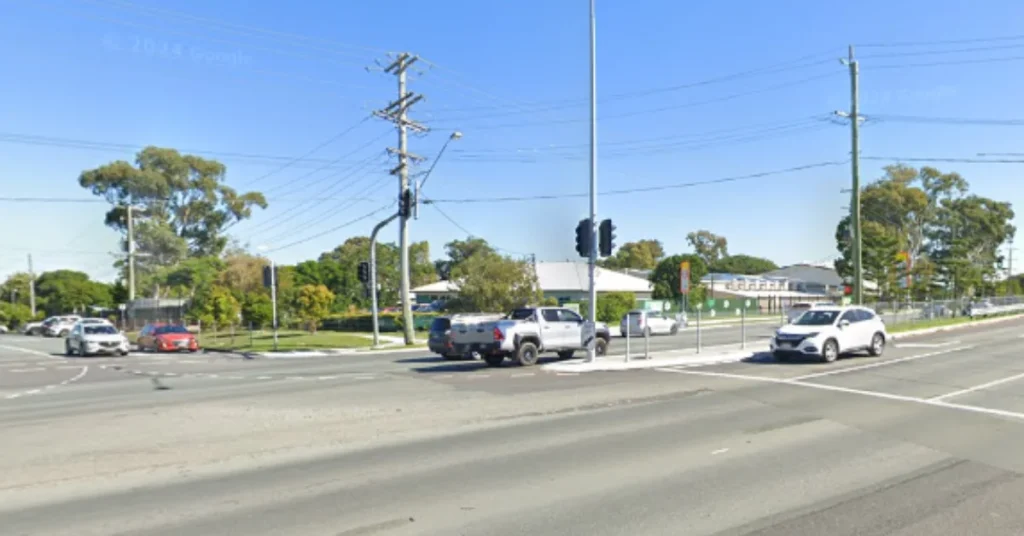
The concerns centre on the intersection of Hercules Road and Anzac Avenue, which sits within a 40km/h school zone and is used daily by students and families travelling to and from nearby schools.
The resident has spent months raising concerns with authorities, arguing that many motorists are failing to observe the reduced speed limit during school hours. He has also reported instances of vehicles allegedly running red lights and travelling at excessive speeds through the intersection.
According to the resident, several near misses involving children have occurred since the start of the current school term. He has also reported repeated incidents involving motorcycles allegedly travelling at extreme speeds through the school zone.
The resident is now pushing for a range of safety measures, including increased police enforcement during school drop-off and pick-up times, digital speed awareness signs and additional traffic-calming infrastructure.
Authorities Reviewing Concerns
The concerns have been raised with local and state representatives, with the intersection already under review by transport authorities.
State Member for Redcliffe Kerri-Anne Dooley said the issue had been brought to her attention and confirmed the Department of Transport and Main Roads (TMR) has been assessing the site.
While permanent speed and red-light cameras have been discussed, TMR has advised that fixed camera installations are generally prioritised based on crash history and locations with higher rates of serious incidents.
As a result, the Hercules Road and Anzac Avenue intersection is not currently identified as a priority location for permanent enforcement cameras. Mobile speed camera operations, however, continue to operate across the wider region.
Moreton Bay councillor Jim Moloney has also referred the matter to Council’s Integrated Transport and Planning Department for further investigation.
The concerns will be considered alongside local traffic and safety assessments, with Council also exploring whether the location may be suitable for future monitoring through its mobile CCTV program.
Read: Mystery Solved! Kippa Ring Woman Comes Forward as New Millionaire
Residents with concerns about road safety can contact Moreton Bay City Council or report dangerous driving behaviour to Queensland Police through Policelink on 131 444.
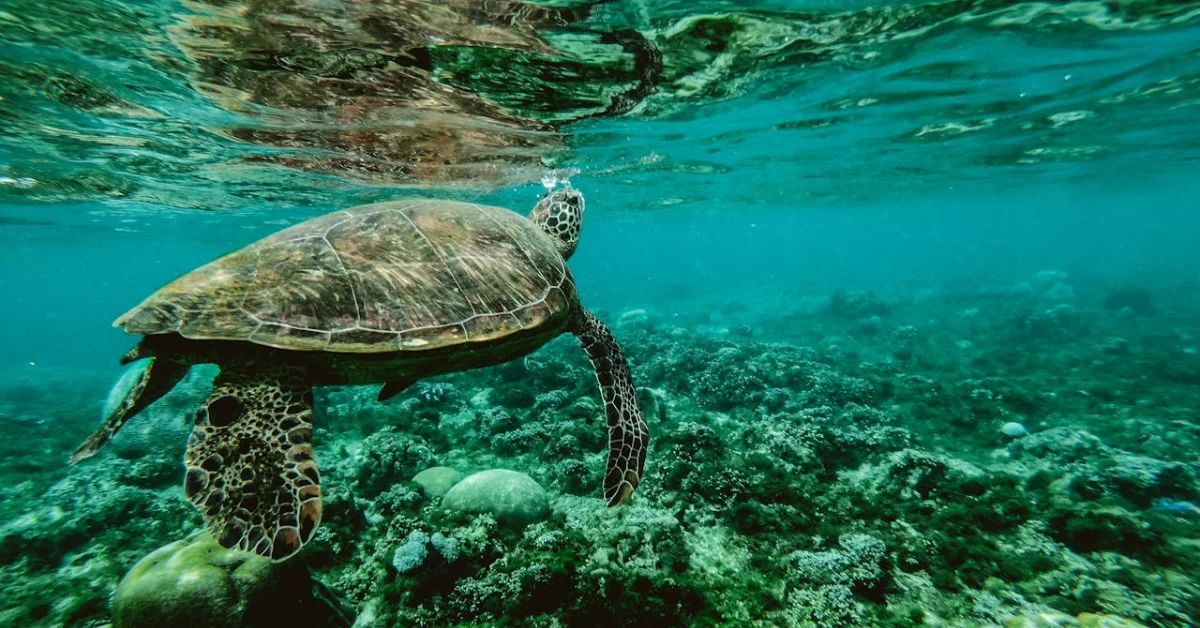
Scarborough will come alive with turtle talk, educational displays, and an outdoor film screening next month, as the Moreton Bay Turtle Awareness Expo returns on Saturday, 9 May.
Running from 10:00 am to 2:00 pm, the free community event will be held at Queens Beach North in Scarborough. Guest speakers, information signage, and educational displays are on the program, with Associate Professor Daryl McPhee among those presenting on local turtle habitats.
Lights, Camera, Turtles: A Movie to Cap the Day
Photo credit: IMDb
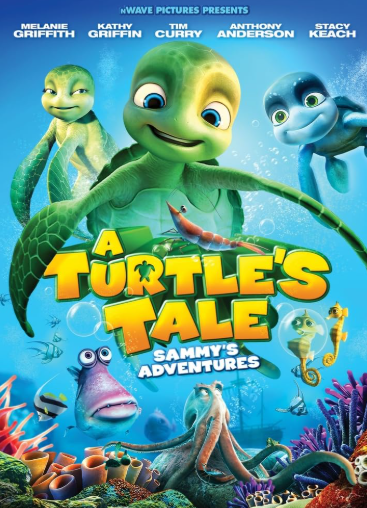
As the sun goes down, the event moves to the Redcliffe Amphitheatre beside Settlement Cove for an outdoor screening of A Turtle’s Tale: Sammy’s Adventures, beginning around 5.00pm. Entry to the film is also free.
The 2010 Belgian-French animated adventure follows Sammy, a young green sea turtle, as he navigates ocean life over five decades, making friends, facing threats, and eventually watching his own hatchlings find their way to the sea. With a score by Game of Thrones composer Ramin Djawadi and a soundtrack featuring Bruno Mars, it is an animated family film with a conservation message at its heart. According to organisers, this will be the first time the film has screened in Australia.
A Beach With a Story Worth Telling
Photo credit: Google Maps/John Godfrey
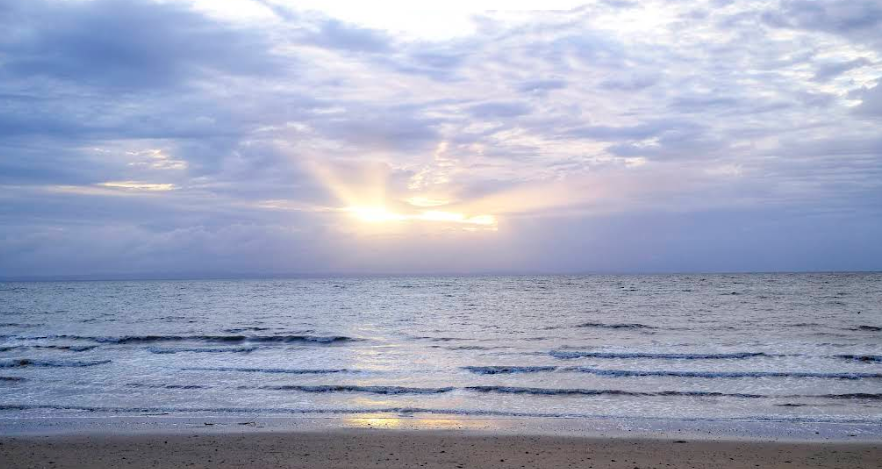
The expo’s location at Queens Beach North is itself significant. Back in 2010, hundreds of real turtle hatchlings emerged near Queens Beach North around 11pm, only to become disoriented by the glow of city lights and street lamps. Instead of heading seaward, they veered inland towards Flinders Parade. Residents and local authorities rushed to the scene to redirect them back to the ocean.
Moreton Bay committed $250,000 to alternative street lighting in the area in the aftermath.
Colin Scobie, Vice President of Rotary Redcliffe Sunrise, one of the event’s key supporters, said understanding turtle habitats matters not just for today but for future generations, particularly as climate change is expected to affect nesting patterns along the beach’s high dry sand embankment.
Now in its fourth year, the expo began as a family fun day and has expanded to include a conservation focus and, this year, a film screening. The film screening has been added to the program following a growing awareness of turtle hatching season, according to organisers.
The expo is supported by the City of Moreton Bay, Rotary Redcliffe Sunrise, and other community partners. Prizes will be up for grabs on the day.
Both events, the daytime expo at Queens Beach North and the evening screening at the Settlement Cove, are free and open to all ages.