


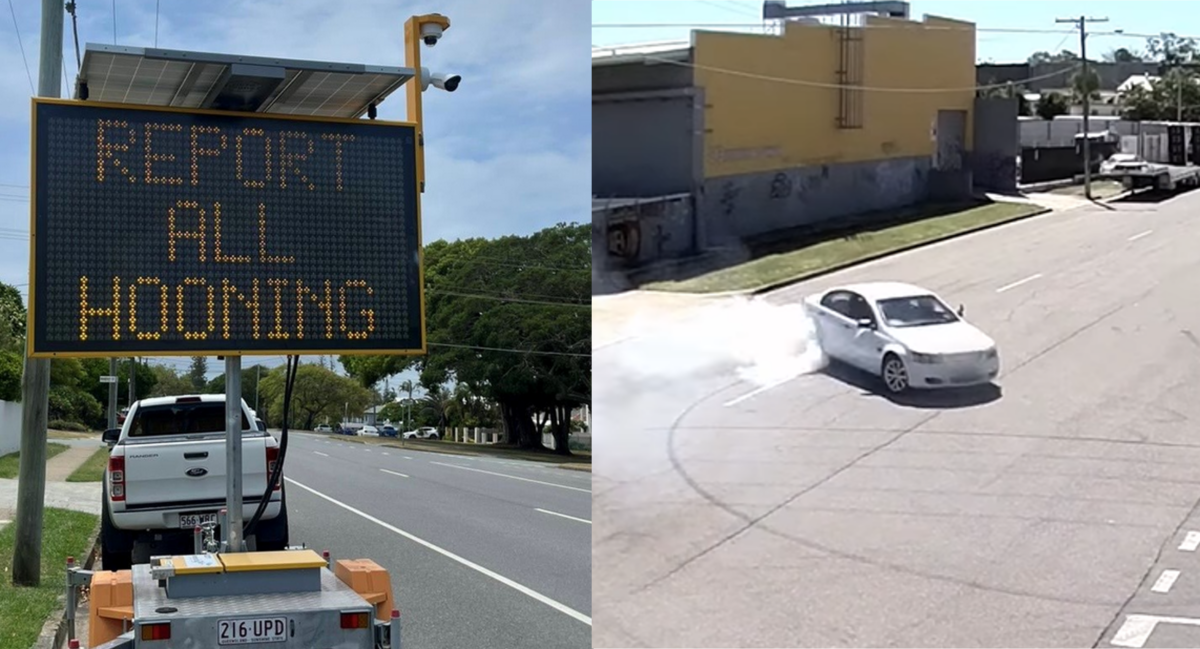
Julie thought she knew what to expect when she moved near Newport Lake — inspections done, lifestyle understood, and a generally quiet bayside rhythm assumed. That sense of calm, she says, did not last.
“I’ve had my sleep broken almost nightly well after midnight and it is destroying my peace,” Julie wrote. “It’s invasive and unsettling, and it makes me feel vulnerable in my own home.”
Julie believes the sound carries from the Scarborough direction, particularly late at night. She says the disruption has left her anxious and unsettled, particularly as an older person living alone.
Her experience reflects what other residents near Thurecht Parade, Scarborough have reported over several years: that late-night hooning activity around the car park opposite the Coast Guard can be disruptive and difficult to prevent, particularly at night.
For many residents, it is not something they say they fully understood until after they had settled into the area.
A quality-of-life issue, not just antisocial behaviour
Hooning is often framed as a law-and-order issue. For residents living nearby, it is first and foremost a quality-of-life concern.
Noise late at night can carry further across open spaces and water. What might be intermittent elsewhere can feel amplified and prolonged in waterfront precincts. Residents describe disrupted sleep, anxiety around evenings and weekends, reluctance to use balconies or open windows at night, and concern for pedestrians, parked vehicles and nearby homes.
The issue is not just noise, but uncertainty — not knowing when activity will start, how long it will last, or whether it will escalate.
Reported incidents and police response
In late 2024, locals reported that hooning activity escalated over several nights near the Thurecht Parade car park, with large groups of vehicles gathering, tyre rubber left on the pavement, debris scattered through the area and damage to fencing reported in other media. Residents said activity intensified toward the end of the week, heightening concerns about public safety.
Police later confirmed they had received multiple reports of hooning at the site across consecutive evenings, including reports around 9pm on a Thursday and again shortly before 9pm on the Friday.
Initial reports described large groups of people gathered in the car park, with multiple vehicles allegedly being driven in a dangerous manner. Police attended the area in response, observed groups of vehicles present, and directed those vehicles to move on. The police helicopter was also tasked to observe the area from above.
Police subsequently stated that while vehicles were present during patrols and aerial observation, no offences were detected at the specific times officers were monitoring the site.
Residents say this pattern — gatherings forming, dispersing when police arrive, and later re-forming — has occurred repeatedly over time, contributing to a sense that enforcement alone has struggled to deter the behaviour at this location.
What this means for neighbourhood amenity and confidence
There is no single measure for how late-night hooning affects a community. But neighbourhood confidence is shaped by perception, predictability and experience.
Where disruption is widely known and consistently addressed, residents tend to feel reassured. Where it is intermittent, highly disruptive and perceived as unresolved, it can erode confidence and create tension within a community.
Research into environmental noise shows that persistent disturbance can influence how people feel about where they live. While most formal studies focus on road or aircraft noise rather than hooning specifically, the principle is similar: amenity matters, particularly in areas valued for lifestyle and calm.
Hooning also carries an added dimension — perceived safety risk. Noise alone is one thing. The fear of vehicles losing control near public spaces, homes or pedestrians is another. That perception weighs heavily on families, older residents and those drawn to waterfront living for its tranquillity.
Consequences: what Queensland authorities say — and what enforcement looks like locally
Queensland’s hooning laws have been progressively strengthened, with authorities repeatedly emphasising that dangerous driving is treated as a serious public safety risk.
In 2022, then Minister for Police and Corrective Services and Minister for Fire and Emergency Services Mark Ryan warned that legislative changes would allow courts to order the destruction of vehicles used in hooning offences.
“If you tear up the road, we’ll tear up your car — it’s that simple,” the minister said at the time, describing hooning as behaviour that “intentionally endanger[s] lives” and should attract severe consequences.
That stance continues to be reflected in day-to-day policing across South East Queensland.
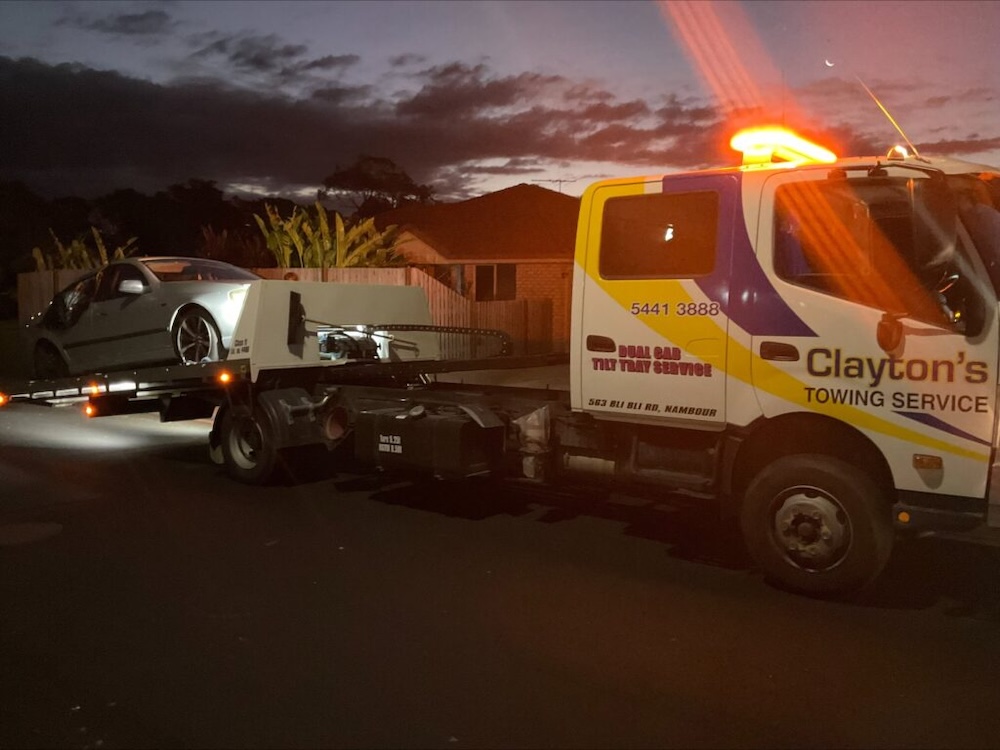
In June 2025, officers from Moreton South Highway Patrol charged an 18-year-old man following alleged hooning offences in Warner, north of Brisbane. Police allege the driver was observed doing a burnout on Gum Street and later hooning near a shopping complex on Samsonvale Road. The vehicle was seized, and the alleged offences resulted in a 90-day immobilisation. The man is due to appear before Pine Rivers Magistrates Court on July 24 (reference number QP2501134662).
Senior Sergeant Brett Stevenson said police would not tolerate hooning behaviour, warning that “intentionally driving in a dangerous manner on public roads puts lives at risk” and that offenders should expect consequences if caught.
The case illustrates the enforcement pathway residents are often urged to rely on — report, investigate, seize and prosecute — even as communities continue to push for preventative measures at known hotspots.
The promise of tranquillity — and the reality residents describe
Newport has been promoted around lifestyle, water and retreat. Promotional material consistently emphasises calm, escape from congestion and a relaxed bayside environment, with Newport Lake positioned as a central lifestyle feature.
Many residents say they experience exactly that during the day and much of the week.
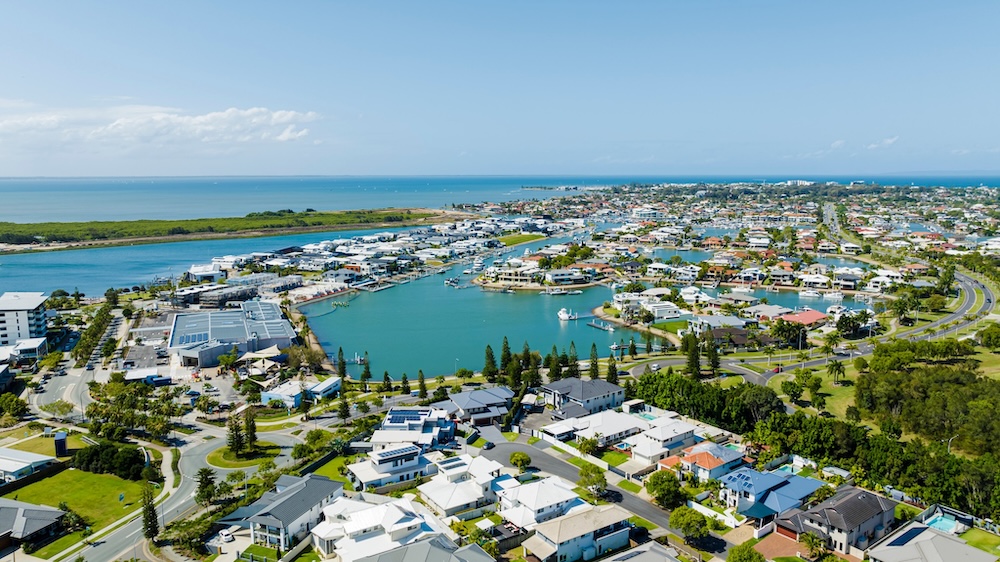
However, where late-night hooning is reported to recur, a tension emerges between expectations of tranquillity and lived experience — particularly for residents closest to identified hotspots.
This is not an allegation of wrongdoing. It is a reflection of how even limited, late-night activity can have an outsized impact on amenity in otherwise quiet areas.
Who is responsible — and why solutions feel slow
Responsibility for addressing hooning is shared across multiple authorities.
Queensland Police are responsible for enforcing hooning and dangerous driving laws, but action depends on offences being observable at the time or supported by evidence.
Local government can support prevention through traffic management processes, public-safety infrastructure and coordination, but does not enforce driving offences.
If the land on which the Thurecht Parade car park sits is publicly owned, meaning physical changes such as barriers or speed-calming measures may require state involvement rather than local council action alone.
Residents and business owners say they have reported incidents, met with authorities and participated in community discussions, but feel progress has been slow and fragmented.
This isn’t just a local issue
Concerns about late-night racing and noise are not unique to Newport or Moreton Bay.
In other cities around the world, residents living near wide roads or open car parks have described similar patterns: vehicles gathering late at night, noise disrupting sleep, and drivers dispersing before enforcement arrives.
Some jurisdictions respond by combining strict enforcement on public roads with investment in legal motorsport venues, allowing high-performance driving to occur in controlled environments rather than residential streets.
While such approaches do not eliminate antisocial behaviour entirely, they illustrate how enforcement, infrastructure and planning are often used together rather than in isolation.
International examples: separating high-performance driving from public roads
Internationally, some jurisdictions have paired strict enforcement of dangerous driving laws with investment in regulated motorsport facilities, aimed at shifting high-performance driving away from public streets and into controlled environments.
In Dubai, this approach has included purpose-built venues such as Dubai Autodrome and the adjacent Dubai Kartdrome, alongside strong traffic enforcement and penalties for illegal street racing. Authorities and road-safety agencies have previously pointed to the role of dedicated facilities in reducing unsafe driving on public roads by providing legal, supervised alternatives for performance-oriented driving.
While such measures do not eliminate antisocial behaviour entirely, international examples are often cited by planners and transport authorities as part of a broader strategy — combining enforcement, infrastructure design and behavioural redirection — rather than relying on policing alone.
Could different design reduce the problem here?
International experience suggests hooning hotspots are difficult to address through enforcement alone.
More durable responses often involve physical design changes that make locations less attractive for gatherings, improved access to usable evidence, consistent and visible policing operations, and clear communication so residents understand what measures are being trialled.
In Scarborough and Newport, residents have repeatedly pointed to physical deterrence — changes to layout, access or surface design — as a necessary complement to policing.
A question residents and planners continue to grapple with
Julie’s story is not about blame. It is about expectations and liveability.
If a neighbourhood is valued for its calm and lifestyle, even intermittent late-night disruption can have a disproportionate impact on how people experience their homes.
The longer concerns persist without a visible, coordinated response, the harder it becomes for residents to feel confident the issue is being meaningfully addressed.
FAQ: hooning and liveability in Moreton Bay
Is hooning illegal in Queensland?
Yes. Hooning and dangerous driving offences carry serious penalties, including vehicle impoundment, immobilisation and forfeiture for repeat offences.
Who should residents report hooning to?
Hooning should be reported to Queensland Police via the dedicated Hooning Hotline on 13HOON (13 46 66) or through the online reporting form. Reports are most useful when they include the time, location, description of vehicles and behaviour, and any available vision.
Can council stop hooning?
Council does not enforce driving offences, but may support prevention through infrastructure, traffic management processes and public-safety measures, depending on land ownership and jurisdiction.
Does hooning affect how people feel about where they live?
Persistent noise and perceived safety risks can influence residents’ sense of comfort, security and enjoyment of their neighbourhood, particularly in areas known for quiet, lifestyle-focused living.
What can residents do if the issue continues?
Document patterns, report incidents promptly, participate in community discussions, and engage with police and local authorities to support longer-term solutions.
Published 9-Feb-2026
Featured Image Photo Credit: Facebook/Kerri-Anne Dooley MP and Facebook/City of Moreton Bay