The daily travel into Brisbane for residents across Newport, Kippa-Ring and the wider Redcliffe Peninsula has long followed a familiar pattern—limited services, peak-hour congestion and delays tied to inner-city bottlenecks.
That’s set to change with the Cross River Rail, a major transport project that will reshape how trains move through Brisbane and how peninsula locals connect to the city and beyond. The project, linking the northern lines to new underground tunnels beneath the Brisbane River and CBD, will give Redcliffe Peninsula Line passengers a smoother, more direct journey.
What’s being built
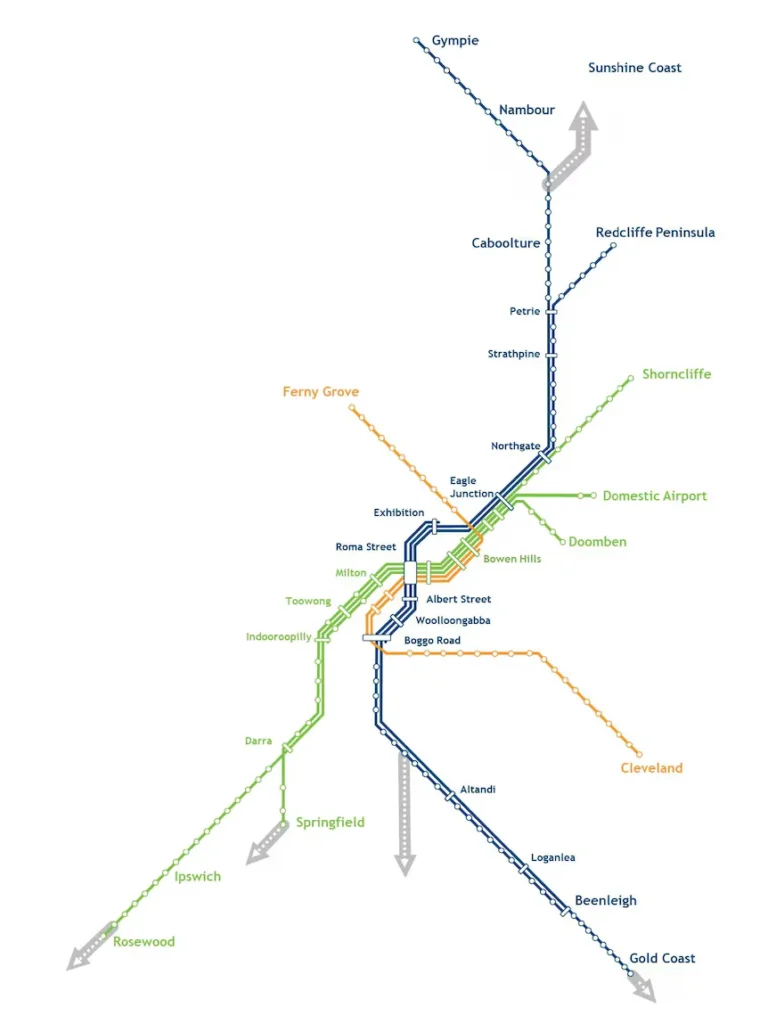
Cross River Rail will add 10.2 kilometres of new rail, including 5.9 kilometres of twin tunnels under the river and city. Four new underground stations—Boggo Road Station, Woolloongabba Station, Albert Street Station and Roma Street Station—are part of the project, alongside wider network upgrades.
Construction began in 2017, with tunnels completed in 2021. Testing is now underway, with services expected to begin by 2029.
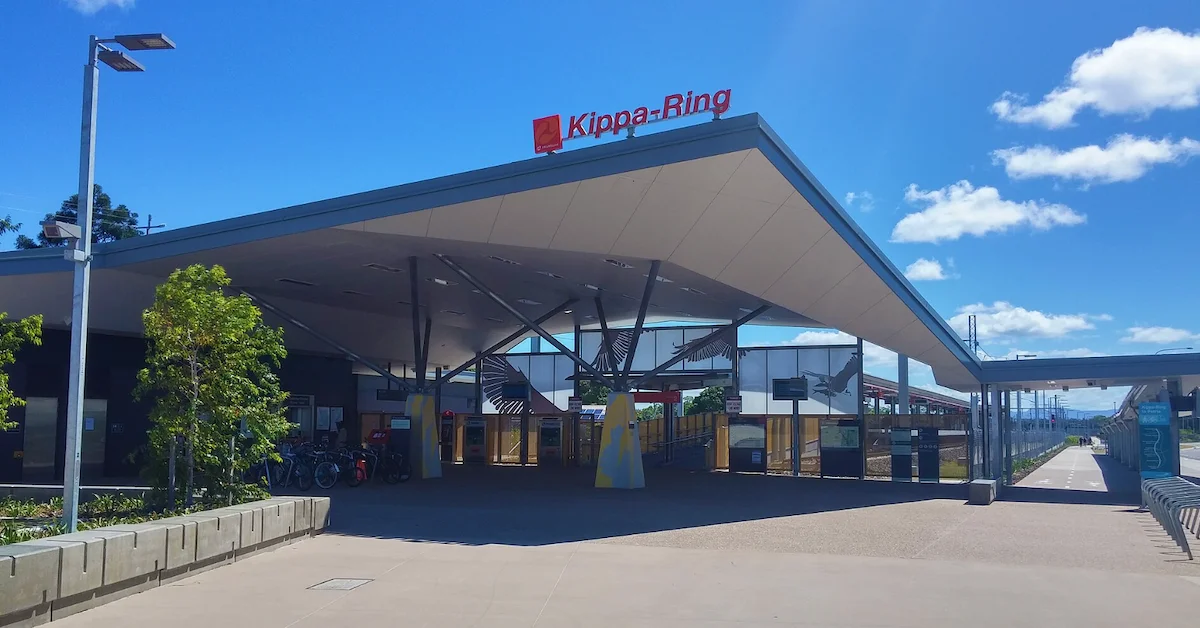
The Redcliffe Peninsula Line runs from Petrie to Kippa-Ring and has been a key link for locals since opening in 2016. Until now, all trains into the CBD have relied on the Merivale Bridge—Brisbane’s only inner-city rail crossing. This has limited how many services can run and contributed to delays.
Cross River Rail removes that constraint by creating a second rail corridor, allowing more trains to move through the city.
One of the biggest changes for Newport and Kippa-Ring residents will be frequency. The expanded network is expected to support up to 24 trains per hour in each direction through the CBD.
This means shorter wait times and more flexibility for commuters. Trains will run more often and with improved reliability, reducing the impact of delays caused by congestion at a single crossing point.
Direct connections across the city
When the project is complete, Brisbane’s rail network will operate in three independent sectors. The Redcliffe Peninsula Line will be paired with southern lines, including the Gold Coast and Beenleigh routes, through the new tunnels.
This means passengers will be able to travel from Kippa-Ring through the CBD to southern destinations without changing trains. The result is a more seamless journey that simplifies commuting and expands access to work, study and leisure.
The benefits extend beyond the daily commute. More reliable public transport can help ease pressure on local roads, particularly during peak periods.
This could mean less congestion and more transport choice for peninsula residents. Improved rail access also makes it easier to move between suburbs, supporting local businesses and community activity across the region.
A fresh boost to emergency relief funding is being welcomed nationwide — but for communities like Newport, it reflects a pressure locals are already feeling in real time.
Some of Australia’s largest support providers, including St Vincent de Paul Society National Council, Anglicare Australia, The Salvation Army Australia and UnitingCare Australia, say demand for help with basics like food, rent and bills has surged — and the latest Federal funding injection comes at a critical moment.
The pressure is no longer abstract
While the announcement is framed at a national level, the underlying trend is playing out across Moreton Bay — including Newport and neighbouring suburbs.
What’s shifting isn’t just the number of people seeking help, but who they are.
Frontline services are reporting more working households, families with children, and people who have never needed support before turning up for assistance. It’s a sign that cost-of-living pressures are cutting deeper — even in areas often seen as relatively stable.
For a suburb like Newport, where many households are balancing mortgages, rising insurance costs and everyday expenses, the squeeze is becoming harder to ignore.
It’s not just demand — it’s who’s asking
Emergency relief organisations say every service across the country is now experiencing increased demand, with some reporting significant spikes.
That includes requests for:
Food parcels and grocery assistance
Help with rent and utility bills
Financial counselling for households under stress
The additional funding is expected to help expand access to these services, including targeted support in high-need and disaster-affected areas.
But providers are clear — it’s a short-term buffer, not a long-term fix.
The new face of financial stress
One of the most telling shifts is the rise in “hidden hardship” — people who are employed but still struggling to keep up.
For many households, it’s no longer about a single crisis. It’s the accumulation of rising costs: groceries, fuel, insurance, and housing all moving at once.
That’s where financial counselling is becoming just as important as emergency relief, helping people navigate mounting pressure before it spirals.
What this means on the Peninsula
For Newport residents, the funding boost is a signal of two things happening at once.
Support services are being strengthened — but the need for them is growing just as quickly.
Local charities and community groups form part of a national network supporting hundreds of thousands of Australians each year, including across Moreton Bay.
And while the extra funding will help keep those services running, providers warn that without broader action on housing affordability and living costs, demand is unlikely to ease anytime soon.
Newport sits beside a wetland system that hosts tens of thousands of migratory shorebirds each year — birds that have travelled up to 11,000 kilometres — raising a pressing question for locals: can a fast-growing waterfront community share space with one of Australia’s most important wildlife habitats?
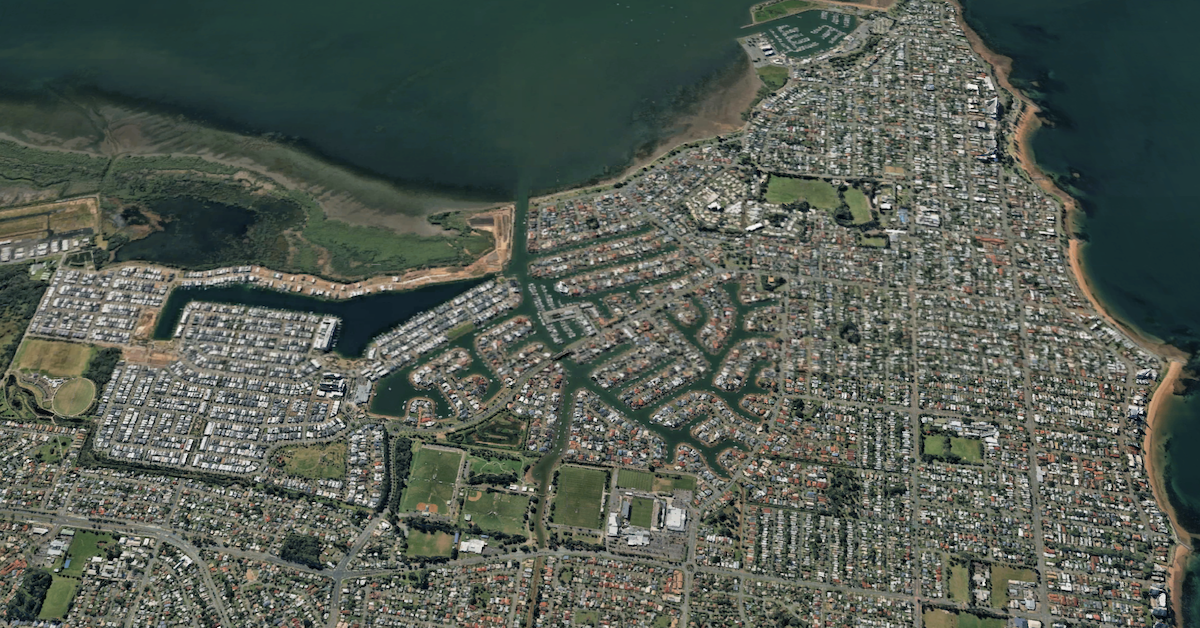
Newport has grown into one of the City of Moreton Bay’s newest waterfront suburbs, built around a network of canals that connect residents directly to Deception Bay and the wider Moreton Bay system. Established in 2008 from parts of Scarborough and Kippa-Ring, the suburb was designed as a residential canal estate with boating access at its centre, according to the City of Moreton Bay and its local history records.
Public spaces like Spinnaker Park reflect that identity, with open lawns, water views and family facilities drawing residents outdoors. Council planning documents show ongoing maintenance of the waterways is required to keep channels navigable and usable for the growing number of residents who rely on them for recreation and access to the bay, as outlined in the Newport Waterways Long-Term Maintenance Plan.
The appeal is clear. Families, retirees and sea-changers are drawn to Newport for its coastal setting and connection to the water. But that same connection places the suburb beside a globally significant ecological system.
Moreton Bay’s Role in a Global Migration Route
The waters and mudflats surrounding the peninsula form part of Moreton Bay, a wetland recognised internationally under the Ramsar Convention. The Department of Climate Change, Energy, the Environment and Water reports the bay meets all nine criteria for international importance, supporting large populations of migratory shorebirds each year, as detailed on its Moreton Bay Ramsar site page.
Organisations such as Moreton Bay Foundation and Healthy Land & Water have documented how species travel vast distances along the East Asian–Australasian Flyway to reach feeding grounds in the bay. Some birds arrive after journeys of thousands of kilometres, relying on the area’s tidal flats to rebuild energy reserves, as explained by the Moreton Bay Foundation and supported by research from Healthy Land & Water.
Research highlighted by the East Asian–Australasian Flyway Partnership shows that species like the far eastern curlew depend on sites like Moreton Bay during the non-breeding season, making the region critical to their survival.
Feeding Grounds and Roosting Sites Under Pressure
For shorebirds, survival depends on a balance between feeding and rest. They forage on exposed mudflats at low tide, then move to nearby roosting sites when the tide rises. Environmental groups say even small disturbances — such as people approaching too closely, unleashed dogs or repeated boat traffic — can force birds to take flight and lose valuable energy.
Information from the Queensland Parks and Wildlife Service notes that repeated disturbance can reduce feeding time and affect migration success. In a system where birds must refuel quickly before continuing long journeys, that energy loss can have lasting effects.
While Newport itself is not identified as a primary shorebird hotspot, it sits near areas such as Deception Bay and Hays Inlet, which provide important habitat across the peninsula. This places everyday local activity within a broader ecological network, supported by regional studies such as the shorebirds in Moreton Bay resource.
As Newport continues to grow, the question is how a waterfront suburb can function alongside sensitive habitat. The peninsula’s development has brought increased use of foreshore areas, waterways and nearby mudflats, all of which are also used by wildlife.
Environmental programs led by groups such as Healthy Land & Water and monitoring efforts linked to the Port of Brisbane highlight the importance of managing human activity across the bay, not just in designated conservation zones, including initiatives like the Port of Brisbane migratory shorebird monitoring program and broader regional work by Land for Wildlife South East Queensland.
Local government and conservation organisations emphasise practical measures that reduce impact, including maintaining distance from roosting birds and managing pets near coastal areas. These actions are presented as part of broader efforts to protect the ecological value of the bay while allowing communities to continue using the coastline.
A Shared Future on the Waterfront
Across the Redcliffe Peninsula, including nearby Scarborough, planning for coastal use continues to evolve, with projects such as the Scarborough Boat Harbour upgrade aiming to improve access and public space while supporting marine activity.
Newport’s position offers both opportunity and responsibility. Its canals and parks bring residents closer to the water, while the surrounding bay connects them to a migration route that spans continents.
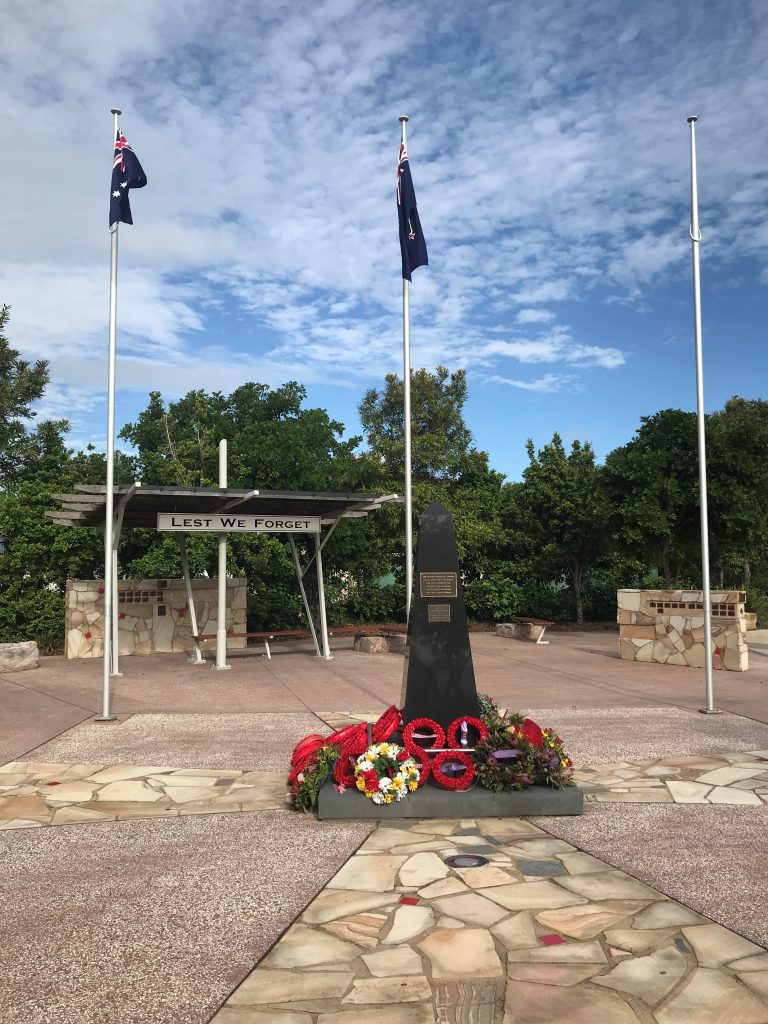
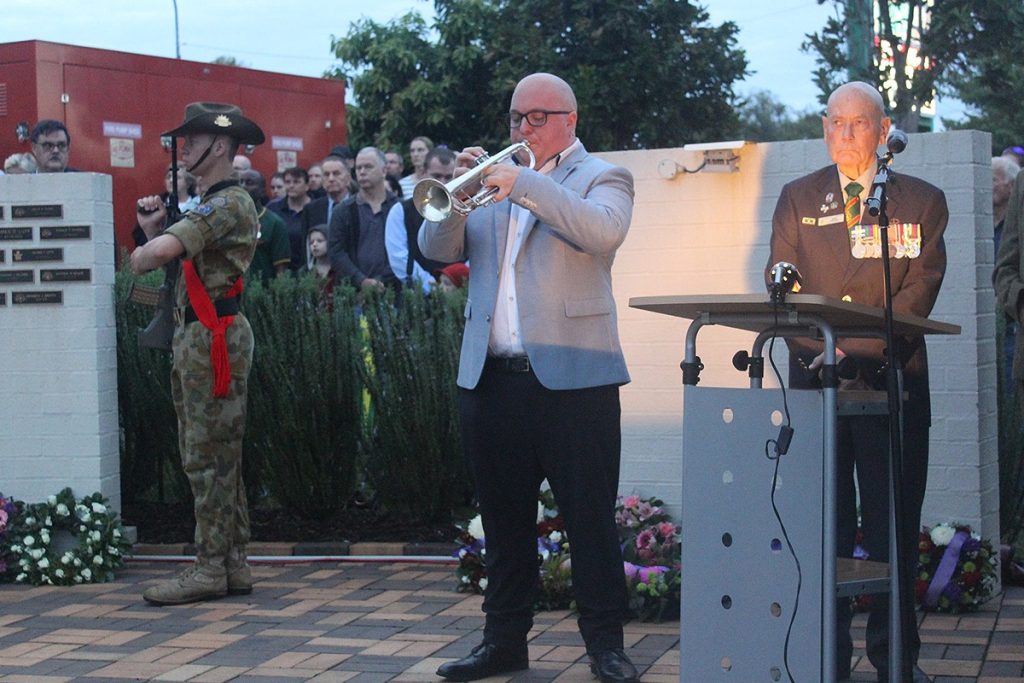
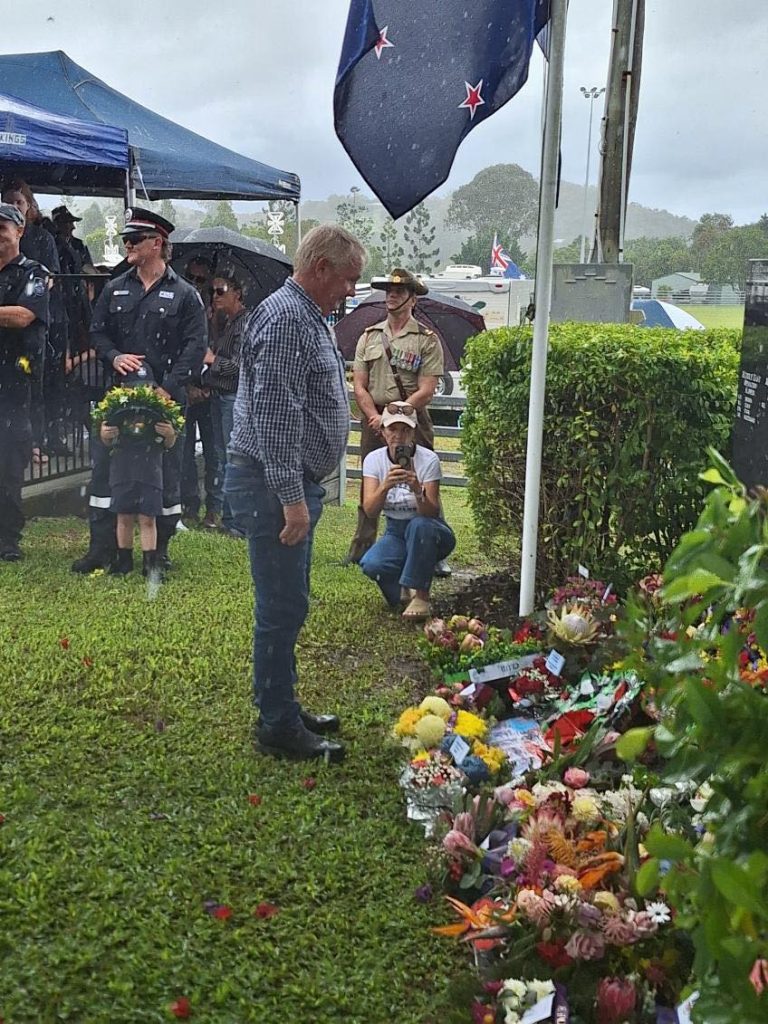
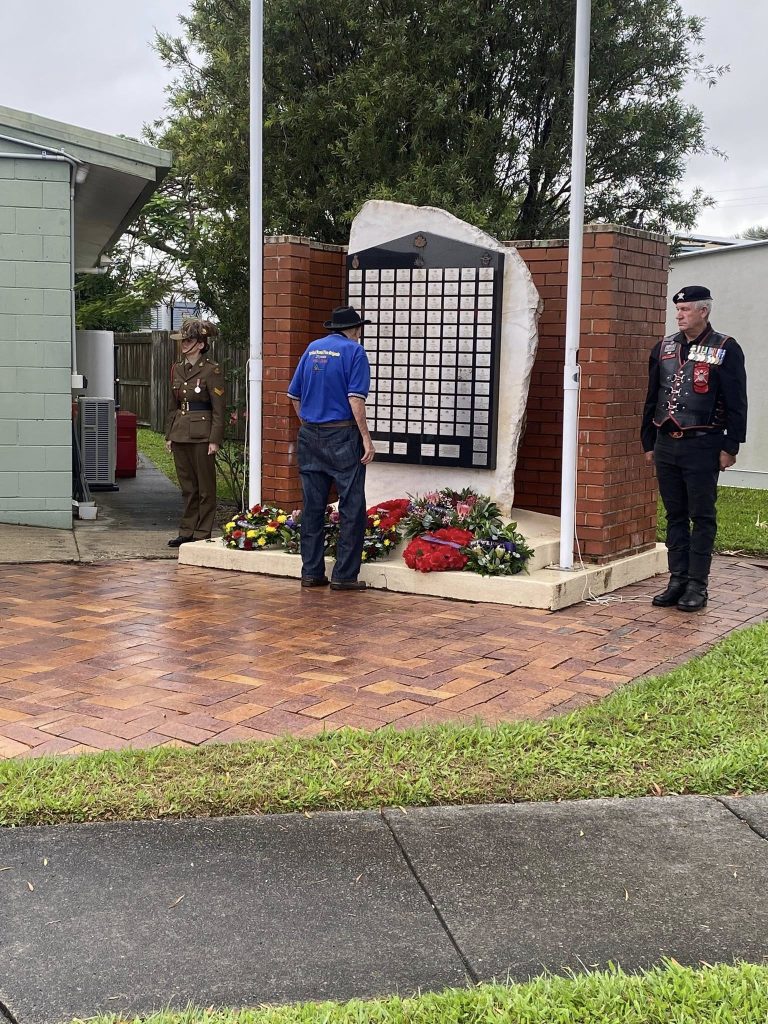
Residents across the City of Moreton Bay will gather on Saturday 25 April 2026 to honour the sacrifice of Australia’s servicemen and women at services held across 17 communities.
Beachmere ANZAC Day Service
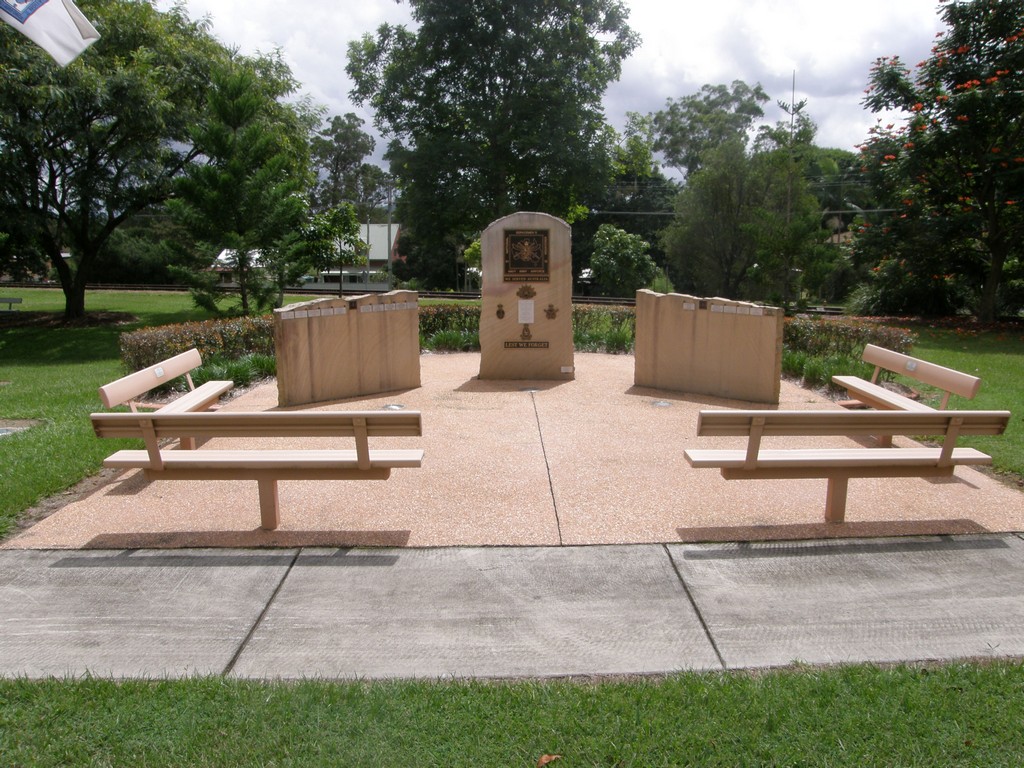
7:00 AM | Beachmere Remembrance Memorial, Clayton Park
Caboolture–Morayfield will host a dawn service at Bolton Clarke retirement village, followed by a march and main service at the Caboolture Town Square.
Dayboro ANZAC Day Services
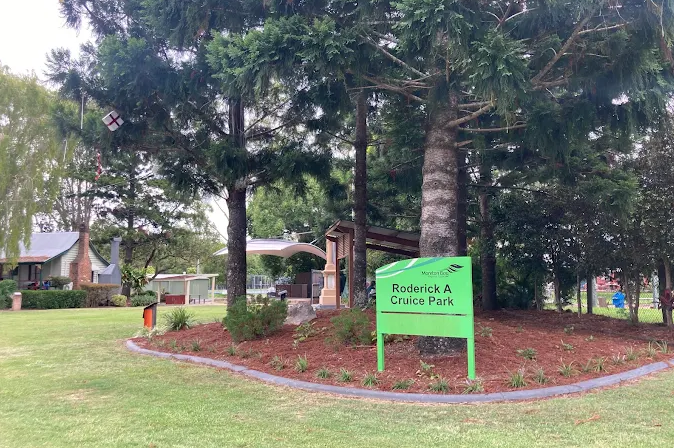
5:15 AM (Dawn Service) | Roderick A. Cruice Park 9:30 AM (March) | Crown Hotel, Bradley Street 10:00 AM (Service) | War Memorial Showgrounds
Find out more
Dayboro will hold a dawn service at Roderick A. Cruice Park followed by a community march and main service at the Showgrounds.
Deception Bay ANZAC Day Service
5:40 AM (March) | Deception Bay Library 6:00 AM (Service) | Deception Bay War Memorial, Ewart Street
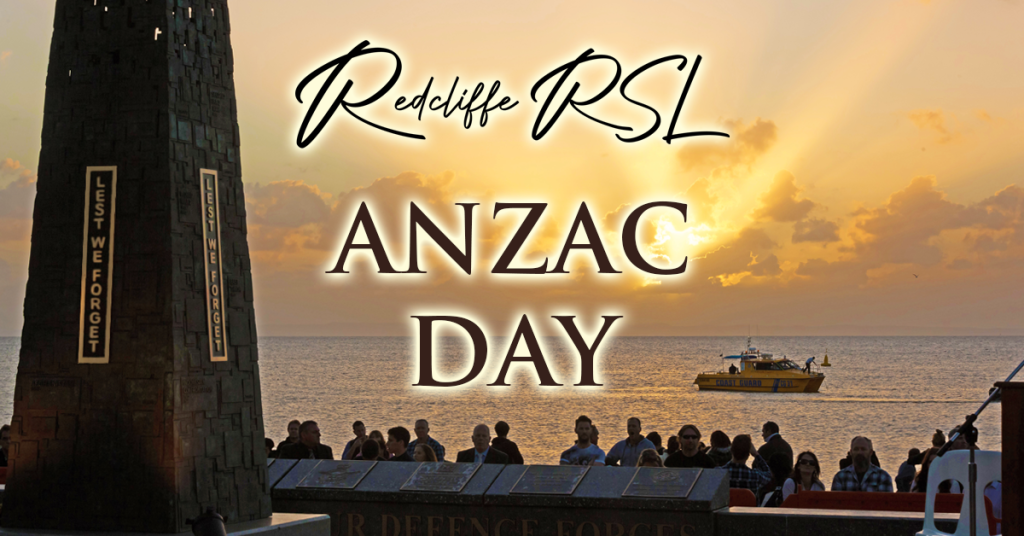
Redcliffe will host multiple commemorations including a dawn service, waterfront march and main mid-morning service at Anzac Place overlooking the foreshore.
Samford ANZAC Day Service
5:30 AM (Dawn Service) | Samford Avenue of Honour
7:45 AM (March) | 2149 Mount Samson Rd, Samford Valley
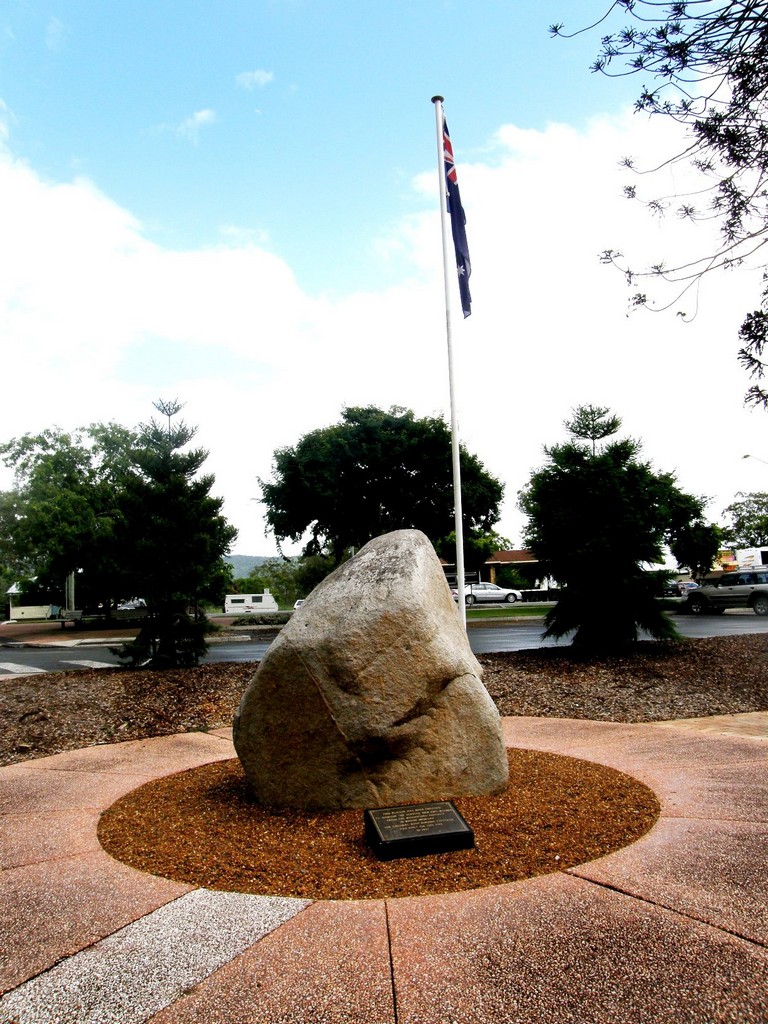
Wamuran will hold an early dawn service at the National Servicemen’s Memorial Park.
Woodford ANZAC Day Services
5:00 AM (Dawn Service) | Woodford Memorial Park 10:15 AM (March) | Corner of George and Archer Streets at intersection of D’Aguilar Highway 10:30 AM (Service) | Woodford Memorial Park
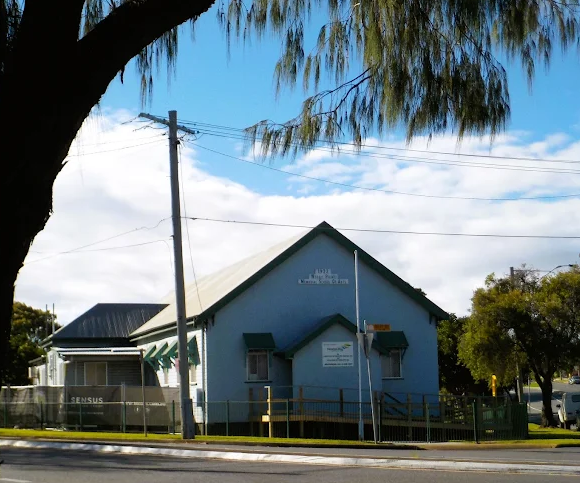
Woody Point will hold a community ANZAC Day service at the Memorial Hall precinct.
Mayor Peter Flannery said Anzac Day remains a powerful opportunity for reflection across the region.
“For more than a century, countless brave Australians, including those from Moreton Bay, have proudly defended us in wars and peacekeeping operations throughout the world,” he said.
“Today, the echoes of those conflicts, and the men and women who fought in them, can be found throughout our great City. Whether it be through a monument, a park, a road or a bus stop, I’m proud to say the Anzac spirit continues to shine brightly in our community.”
Residents are encouraged to attend local commemorations, pause in reflection, and pay respect to the servicemen and women whose sacrifice continues to shape the region’s identity and spirit.
Anzac Day Flypasts
Royal Australian Air Force aircraft will carry out flypasts across Queensland as part of Anzac Day commemorations.
Air Force flying activities
Time
Location
Aircraft
10:12am
Pine Rivers RSL Sub-Branch, 1349 Anzac Avenue Kallangur Kallangur QLD
1x F/A-18F Super Hornet
10:14am
Dayboro War Memorial Association, Dayboro War Memorial Showgrounds Mt Mee Rd Dayboro QLD
1x F/A-18F Super Hornet
10:16am
Caboolture War Memorial Caboolture Town Square King St Caboolture QLD
1x F/A-18F Super Hornet
10:19am
Bribie Island RSL Sub-Branch, 99 Toorbul St Bongaree Bribie Island QLD
Newport’s story begins long before canals, pontoons and landscaped parks defined its edges. Once a stretch of low-lying grazing land, the area was known as much for cattle as it was for crabbing along the mudflats. Locals would walk out across the shifting ground, setting pots in an environment that changed with the seasons.
Tides regularly reshaped the boundary between mangroves, saltmarsh and paddocks, making it a place that was never quite fixed. Today, that same landscape has been carefully engineered into a residential community where water is no longer unpredictable—but it remains central to everyday life.
Water as part of the daily rhythm
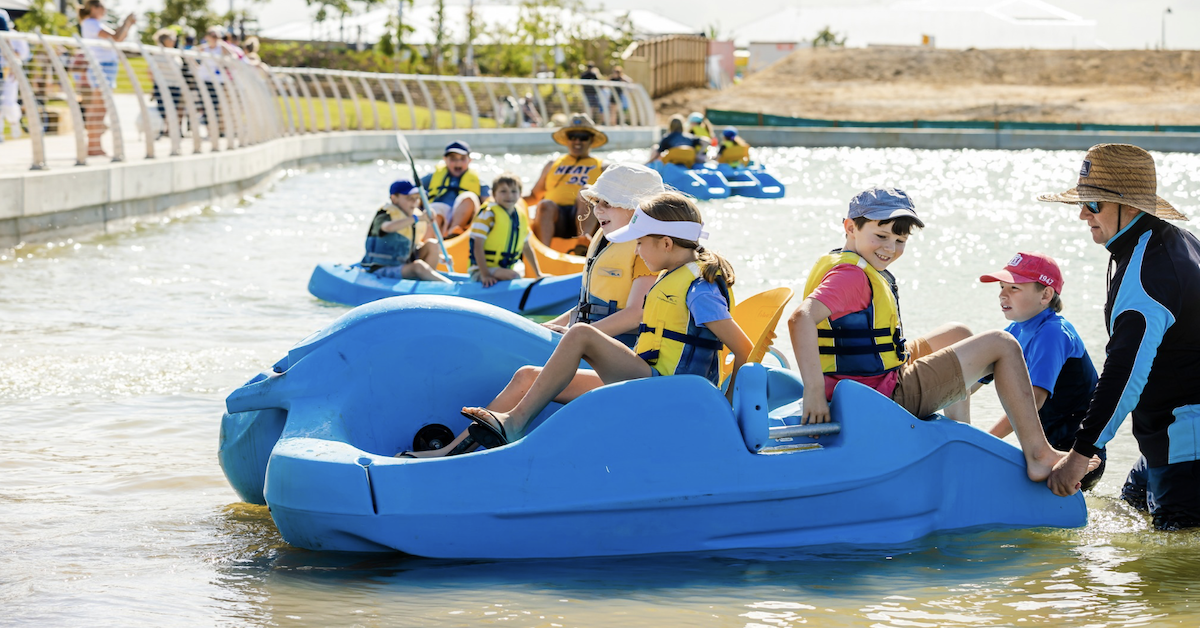
In Newport, access to water isn’t reserved for weekends. It’s built into the rhythm of daily routines. Walking paths follow canal edges, parks sit beside the lake, and streets naturally lead towards open views and breezes.
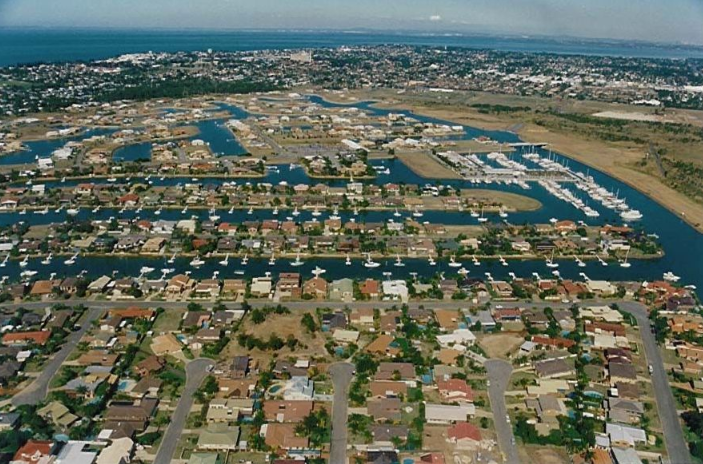
Newport canal development from the air in 1993, looking east. Albatross Canal is on the right, with land southwest of the Griffith Road bridge still undeveloped at the time of capture. Kingfisher, Sandpiper and Pelican canals and the marina are visible in the foreground, with additional canals extending through the broader estate in the background. Photo Credit: Moreton Bay Region Libraries – Our Story/RLPC-001\001231
Rather than a constant “holiday” feel, the lifestyle here is shaped by small, repeatable habits. Residents take short walks in the morning or at dusk, bring children to nearby parks after school, or step outside briefly because the environment invites it.
These low-effort moments matter. Over time, they become routine—and it’s within those routines that community begins to take shape.
Familiar faces and shared spaces
When people use the same paths at similar times, familiar faces begin to appear. A nod becomes a greeting; a greeting becomes a conversation. While no place can guarantee connection, Newport’s layout increases the likelihood of these small, repeated interactions.
At the centre of this pattern is the lake, a defining feature that supports simple, everyday activities—walking, cycling, sitting, and watching children play. Because these activities require little planning, they’re easy to repeat, helping to build a sense of familiarity over time.
A connected network of waterways
Beyond the lake, Newport’s canal system extends the presence of water throughout the suburb. Rather than acting as a single focal point, it forms a network that shapes how residents move and experience the area.
Water becomes part of the backdrop—visible from streets, accessible from parks, and woven into daily movement. This continuous presence influences how people spend their time, often encouraging them outdoors more frequently.
Shared access for a broader community
Public spaces play a key role in making this lifestyle accessible. Spinnaker Park provides shared water access alongside playgrounds designed for children of different abilities, as well as launch points for kayaks and paddleboards.
These features help bring together a mix of residents for similar activities at similar times. Rather than functioning as a destination, the park becomes a regular meeting ground—supporting casual interaction and a stronger sense of neighbourhood familiarity.
Identity shaped by environment and history
Newport’s identity is reflected in its details. Canal names, chosen by residents in the late 1980s, follow a theme of Australian coastal birds such as pelican, jabiru and sandpiper. Street names, meanwhile, draw from yachts that competed in the America’s Cup, linking the suburb to a broader maritime heritage.
This combination of environmental and historical references gives the area a layered character, reinforcing its connection to both water and coastal culture.
Living with water awareness
Living close to water naturally increases awareness of the environment. Weather patterns, tides and light conditions become more noticeable when they are part of the immediate surroundings.
Even for those who don’t actively use the canals, this awareness can influence daily decisions—when to walk, when to sit outside, or when to head to the park. It’s a subtle but consistent connection that shapes how residents engage with their surroundings.
Parks as everyday gathering places
Local parks further support Newport’s community life. Newport Park offers practical amenities including play equipment, open space, and areas for dogs, encouraging people to stay longer rather than simply pass through.
These spaces become part of daily routines—places where children play, neighbours meet, and social connections gradually form.
A community built through repetition
In Newport, community is not defined by a single feature or event. It develops through repetition and shared experience. Water plays a central role, but it is the way residents interact with it—regularly, casually, and often without planning—that shapes the suburb’s character.
Over time, small moments—walking a familiar path, recognising familiar faces, pausing by the water—build a sense of belonging. It’s not something dramatic or immediate, but something that grows steadily, becoming part of everyday life.
They fly 11,000km without stopping — and land just off Newport. By the time they reach Moreton Bay, some migratory shorebirds are running on empty.
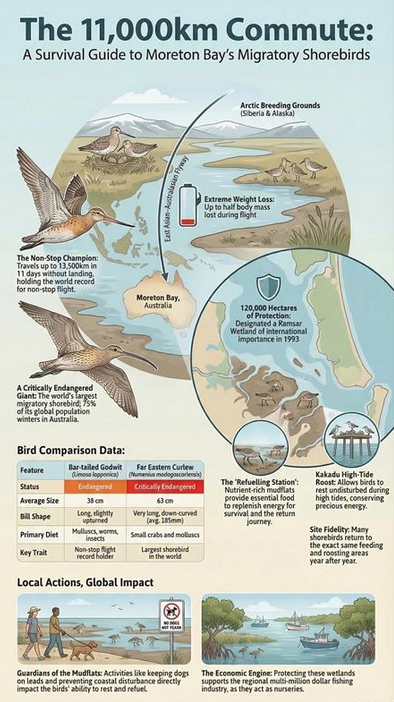
They have flown more than 11,000 kilometres non-stop from the Arctic — no landing, no rest, no margin for error. When they drop into the tidal flats of the bay, it’s not a scenic stopover. It’s a critical refuelling point that determines whether they live or die.
From Newport, that global journey ends just offshore.
What’s often framed as a Banksia Beach or Bribie Island story is, in reality, a bay-wide system. The same mudflats, seagrass beds and tidal zones that support birds in the Pumicestone Passage are part of the broader Moreton Bay network that extends across to the Redcliffe Peninsula.
Running on fumes when they arrive
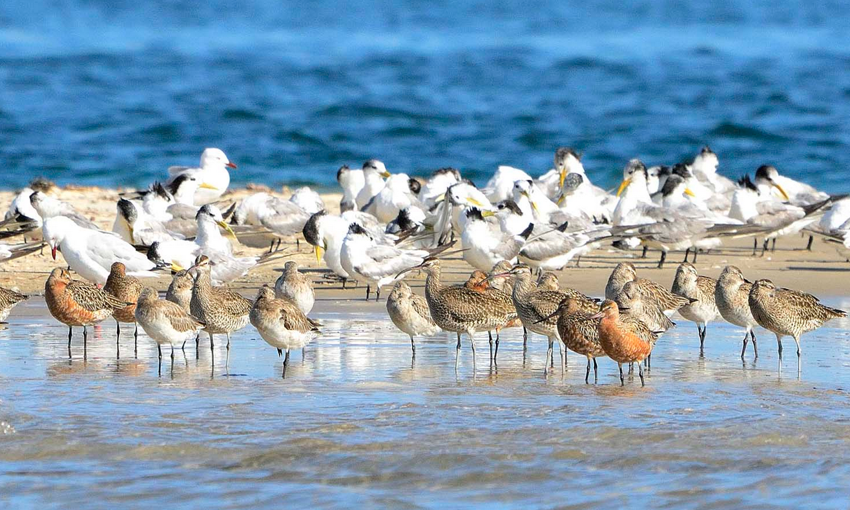
Among the species making the journey are bar-tailed godwits and far eastern curlews — both built for distance, but with limits.
Godwits are among the most extreme endurance flyers on the planet. They cannot land on water, meaning once they leave the Arctic, they must reach land in a single continuous flight. Some have been tracked flying close to 12,000 kilometres over more than a week.
By the time they reach Queensland, they have burned through a large portion of their body mass.
The far eastern curlew, the largest migratory shorebird, faces a different challenge. It is now critically endangered, and Moreton Bay remains one of its most important refuges globally.
These birds are not just passing through — they are returning. Year after year, many come back to the same sections of mudflat. If those habitats degrade or disappear, they do not easily relocate.
Everything depends on the tide turning
What keeps them alive is timing.
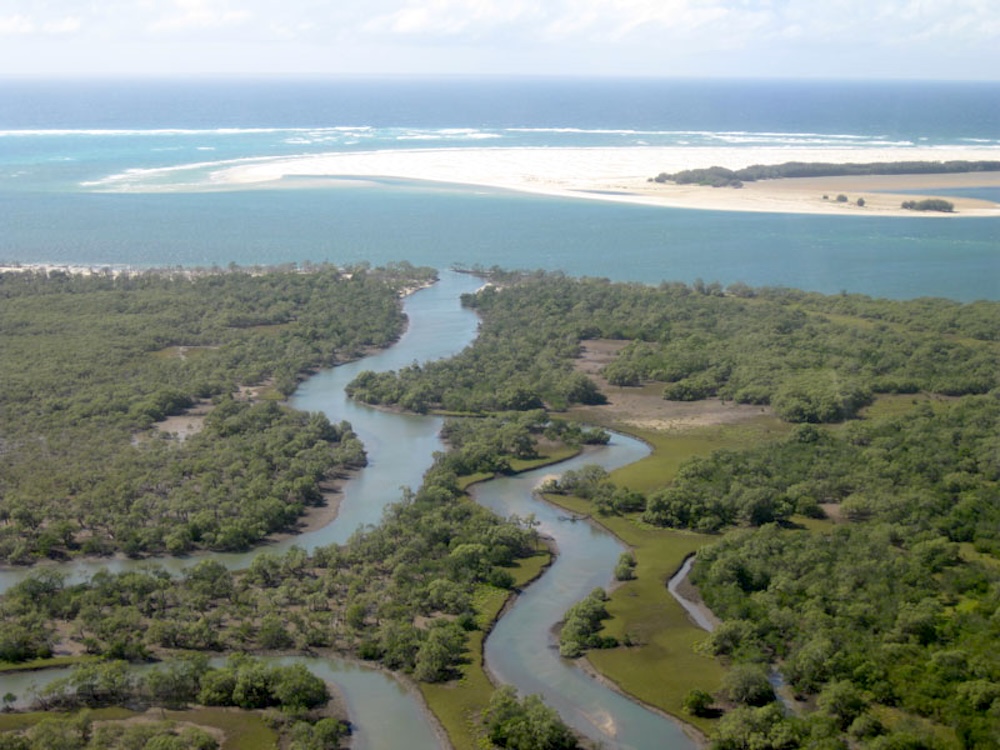
At low tide, the bay exposes vast mudflats rich in small invertebrates. This is where birds rebuild energy quickly, feeding intensively to recover from the journey.
At high tide, those feeding grounds vanish. Birds move to roosting areas where they rest and conserve what little energy they have regained.
Both parts of that cycle are essential. Disturbance at the wrong time — particularly at roosting sites — forces birds into flight, burning energy they cannot afford to lose. Enough disruption, and they simply don’t recover.
Across Moreton Bay, a mix of natural and managed roosts exists to keep birds close to feeding grounds and minimise that risk.
Why this stretch of water matters globally
Moreton Bay is not just locally important — it sits on a migration route that spans continents.
It forms part of the East Asian–Australasian Flyway, linking breeding grounds in the Arctic with non-breeding habitats across Australia and Southeast Asia. Tens of thousands of migratory shorebirds rely on the bay each year.
Its strength is in how it functions: mudflats, mangroves, seagrass beds and tidal channels working together as a single, highly productive system.
If one part is compromised, the impact is felt across the whole.
The quiet link to the local economy
The same environments that support migratory birds also sustain local livelihoods.
Seagrass beds and mangroves act as nurseries for fish, prawns and crabs. Moreton Bay produces a significant share of Queensland’s seafood relative to its size, with both commercial and recreational fishing contributing substantial economic value.
It’s the same foundation — just seen from a different angle.
One Connected System
This isn’t happening somewhere else.
The bay operates as one connected system. What happens along the Redcliffe Peninsula — including Newport — feeds into the same water quality and habitat conditions that birds depend on elsewhere.
Runoff, shoreline use and disturbance don’t stay local. They accumulate across the bay.
Where the journey either works — or doesn’t
From Newport, the water looks steady and familiar.
But for a bird arriving from the Arctic, this is the point where everything is decided.
No backup stop. No second attempt.
Just one stretch of coastline — and whether it can recover enough to keep going.
Newport residents affected by late-night hooning may soon see a change with a new mobile CCTV unit at Scarborough Marina. The city’s Public Safety Team installed the camera after receiving repeated concerns from residents about hooning and antisocial behavior in the area.
The installation follows weeks of concern from residents near Newport Lake and Scarborough, where late-night driving activity has been linked to noise disruption and safety worries.
In earlier reporting, locals described repeated disturbances linked to gatherings of vehicles around the Thurecht Parade car park. Residents said activity often occurred late at night, with groups dispersing when police arrived and returning again later.
Council’s decision to place a portable CCTV unit at the marina suggests a shift toward more visible monitoring at known hotspots. The move aims to support enforcement efforts and improve the ability to identify vehicles involved in alleged offences.
Authorities clarified that the CCTV system is jointly managed by the City of Moreton Bay and the Queensland Police Service. The cameras include number plate recognition technology, allowing vehicle details to be captured and reviewed if needed.
The system is part of a broader network of mobile cameras that are rotated between locations. This means the unit may not remain permanently at Scarborough Marina, but can be moved depending on where issues are reported.
Bridging gaps in enforcement
The use of CCTV reflects the challenge authorities face in responding to hooning incidents as they occur. Police have previously confirmed attending the Scarborough area following reports of dangerous driving, including gatherings involving multiple vehicles.
However, officers have also stated that no offences were detected during some patrols, even when vehicles were present. Residents have described a pattern where activity appears to pause during enforcement and resume later, making it harder to take direct action.
Authorities have continued to emphasise that hooning is treated as a serious safety issue in Queensland, with penalties that can include vehicle seizure and court action.
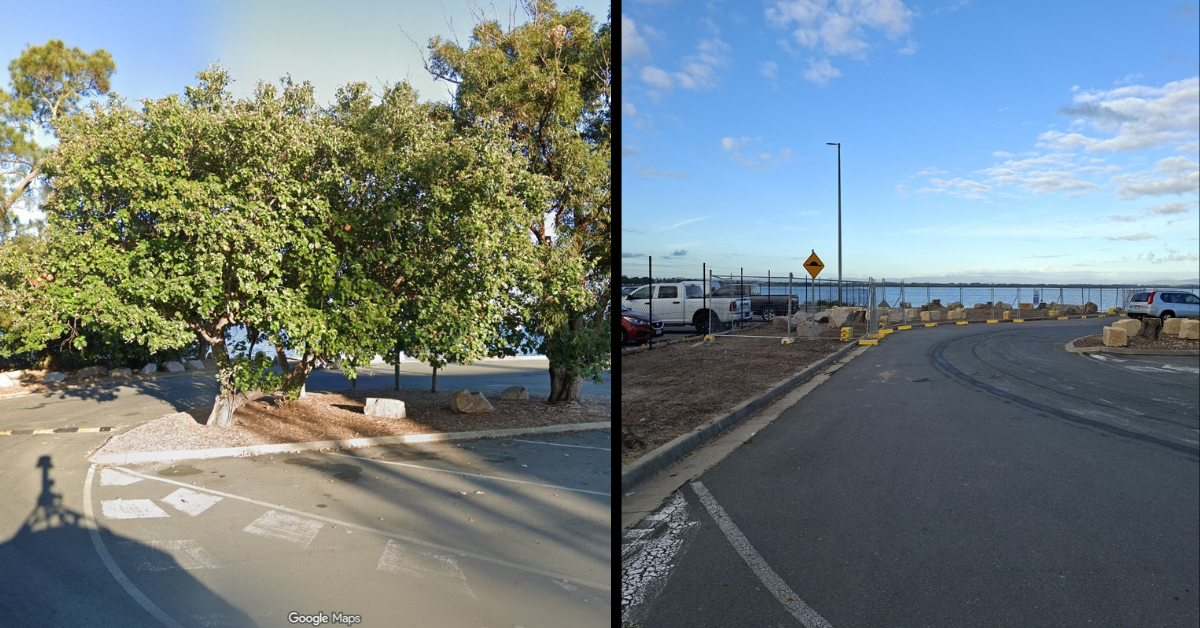
The removal of a large cotton tree at the Scarborough boat ramp car park has drawn strong reactions from locals, as attention turns to planned upgrades for the harbour area.
Residents say the tree, which stood on the edge of the car park, had long provided shade and shelter. Its removal in recent weeks has been noticed by regular visitors, with some also reporting the placement of large rocks nearby. There has been no confirmed public explanation for why the tree was taken down.
Mixed Views from the Community
The change has prompted a range of responses within the local community. Some residents have expressed concern about the loss of greenery and the role the tree played in the area’s character. Others have pointed to how the space was being used, including reports of camping beneath the tree, and say changes may improve how the area functions.
Online discussion shows a clear divide. Some community members described the tree as an important part of the landscape and said its removal was disappointing. Others argued the site had ongoing issues and supported changes that could improve access and upkeep.
These differing views reflect broader conversations already taking place about the future of the harbour.
Harbour Upgrade Plans Underway
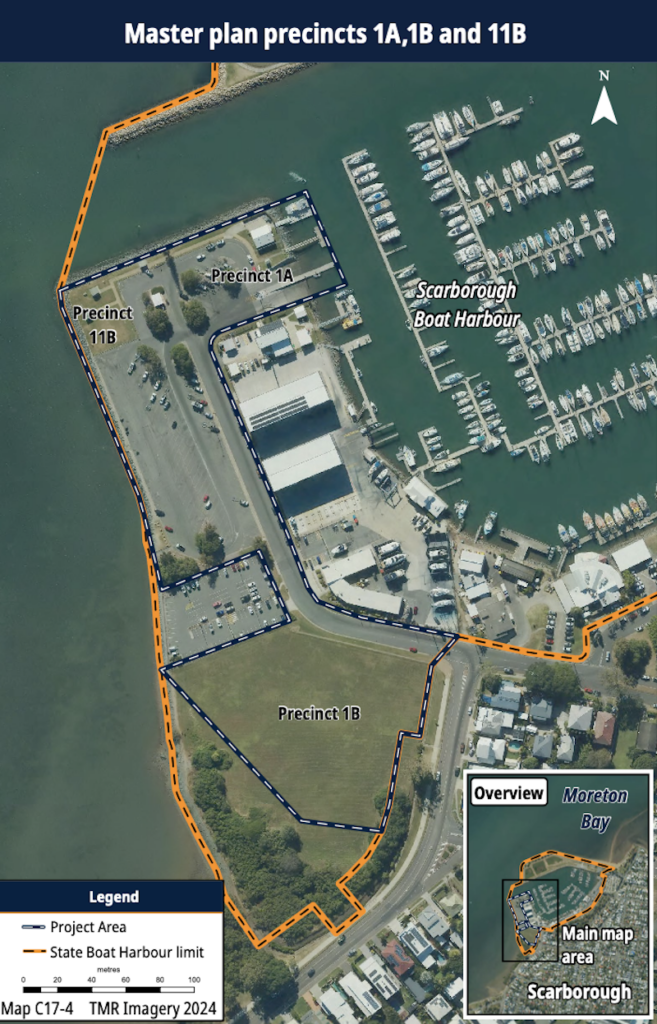
Queensland has committed $3.9 million to begin the first stage of the Scarborough State Boat Harbour master plan. This stage focuses on areas around the public boat ramp, car parking and nearby open space — the same location where the tree stood.
Planned works include upgrades to pathways, lighting, landscaping and public amenities. There are also proposals to improve parking, increase safety and enhance access for recreational boating.
Planning and design work is already underway, with construction expected to begin in late 2026.
Debate over changes at Scarborough Harbour has been ongoing for several years. Earlier consultation on the master plan drew strong feedback from residents, particularly around green space, parking and the scale of future development.
In response, the final plan was adjusted to increase open space, retain existing fishing and boating uses, and refine how different areas of the harbour would be used.
Despite these changes, concerns have continued in some parts of the community, especially around how upgrades may affect the look and feel of the area. As design work continues, more visible changes are expected across the harbour precinct.
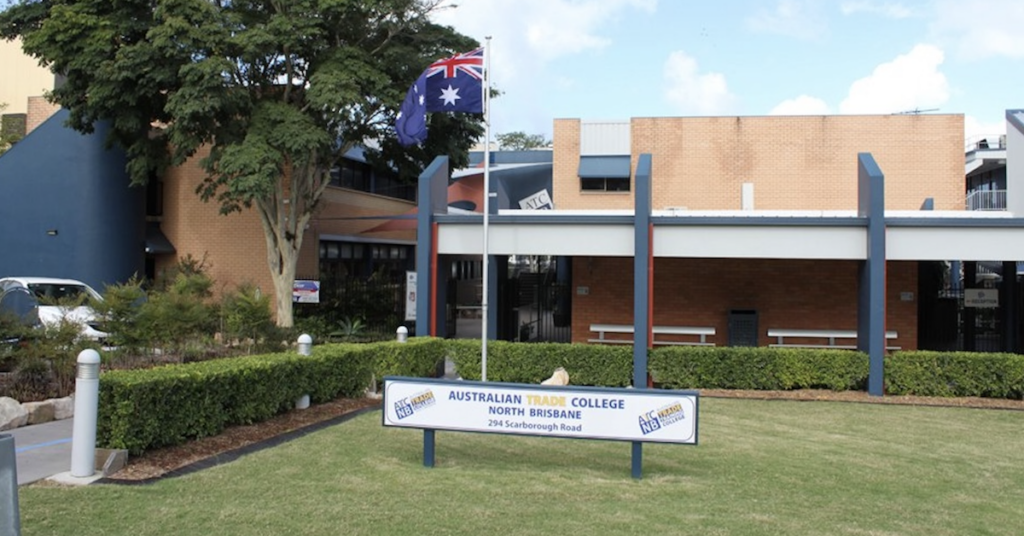
A graduate of the Scarborough-based Australian Trade College North Brisbane has shifted her career direction after discovering a passion for teaching while volunteering in rural Cambodia, showing how a trade pathway can lead to unexpected opportunities beyond the salon.
Georgia Creevey joined an eight-day volunteer placement in Cambodian village schools through the yLead Alternative Schoolies program in November. The experience formed part of the college’s leadership and service partnership with the youth organisation.
From Hairdressing Apprentice to Aspiring Teacher
Creevey completed her hairdressing training at the Scarborough campus and received the college’s Year 12 Commendation Award for Hairdressing. While she had been preparing for a career in the salon industry, the volunteer program introduced her to a different kind of work.
During the placement, she spent time helping primary school students practise English and interacting with children eager to learn about life outside their village. The experience revealed that many of the communication skills developed during her apprenticeship could apply in a classroom setting.
The people skills required in hairdressing — listening closely to clients, understanding their needs and helping them feel comfortable — translated well into supporting young learners who were navigating language barriers.
Program leaders with yLead encouraged Creevey to consider teaching as a future career after observing how she connected with students during classroom activities and group discussions.
A Program Linking Scarborough Students to Global Experiences
The volunteer placement was part of the Alternative Schoolies initiative run by yLead, which offers young Australians the chance to take part in service-focused travel instead of traditional end-of-school celebrations.
Each year, students connected to the Australian Trade College North Brisbane take part in these programs in destinations, including Cambodia, New Zealand, Kokoda and Tanzania.
The college says the partnership aims to give trade students leadership and community engagement opportunities alongside their vocational training. According to ATCNB acting principal Megan Moore, these experiences help students build perspective, maturity and confidence that can carry into different industries.
Creevey travelled to Cambodia with fellow graduates Jorja Butler and Emily McLucas. Butler had earlier received the Year 12 Excellence Award for Hairdressing and progressed quickly through her apprenticeship, while McLucas served as a student ambassador during her time at the college.
After the Cambodia Experience
After returning to Australia, Creevey decided to pursue teaching. She has enrolled in a bridging course at the University of the Sunshine Coast and plans to begin a Bachelor of Primary Education in mid-2026.
She has also been selected as a mentor for yLead in 2026, where she will support students attending leadership conferences and may return to Cambodia with a future program group.
The college said Creevey’s story reflects how vocational education can provide pathways that extend beyond the original trade, with real-world experiences helping students recognise new strengths and interests.
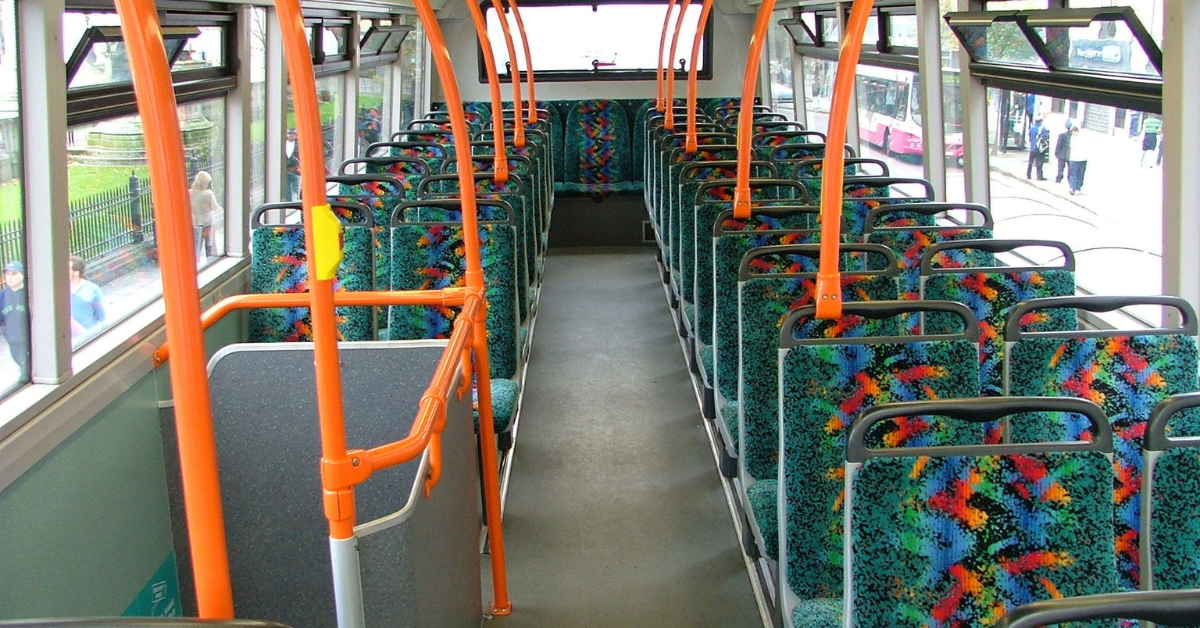
Residents in Newport are calling for improved bus services, saying better connections are needed to link the growing suburb with nearby shops, the waterfront and Kippa-Ring train station.
The discussion has gained attention in recent months through a community petition calling for expanded bus services in Newport. The petition asks for routes that better connect residents to key destinations across the Redcliffe Peninsula, including Kippa-Ring station, local shopping areas and the foreshore.
Current Transport Services in Newport
Newport is already served by public transport through the Translink network. One of the primary routes operating in the area is Route 699, which services several stops including Newport Drive, Griffith Road and Endeavour Esplanade.
According to Translink timetables, Route 699 travels through the peninsula and connects with Kippa-Ring station, providing access to the Redcliffe Peninsula Line for travel towards Brisbane.
The route means Newport residents do have access to public transport, although some locals say the current service does not fully meet the needs of a growing residential area.
Newport has seen steady residential growth in recent years, with new housing developments bringing more families and commuters to the suburb.
For residents without regular access to a car, buses play an important role in connecting the community to daily destinations such as schools, workplaces, shopping centres and medical services.
Public transport can also provide easier access to the train network at Kippa-Ring, which many peninsula commuters rely on for travel into Brisbane.
Community Advocacy Gaining Attention
The call for improved services has also drawn interest from the South-East Queensland Transport Association (SEQTA), a community advocacy group focused on public transport issues across the region.
SEQTA describes itself as an independent community organisation advocating for improvements in public transport frequency, accessibility and network coverage across South-East Queensland.
Earlier this year, members of the group met with Redcliffe MP Kerri-Anne Dooley, who later shared on social media that the discussion included public transport improvements on the peninsula and encouraged residents to sign the Newport bus petition.
The Newport discussion comes as transport planning continues across South-East Queensland in the lead-up to the 2032 Olympic and Paralympic Games. Leaders are currently exploring several potential expansions to the Brisbane Metro network.
But the key question remains whether the current bus network will evolve alongside Newport’s growth. Advocates say improving local bus connections would make it easier for residents to travel around the peninsula without relying entirely on cars.