




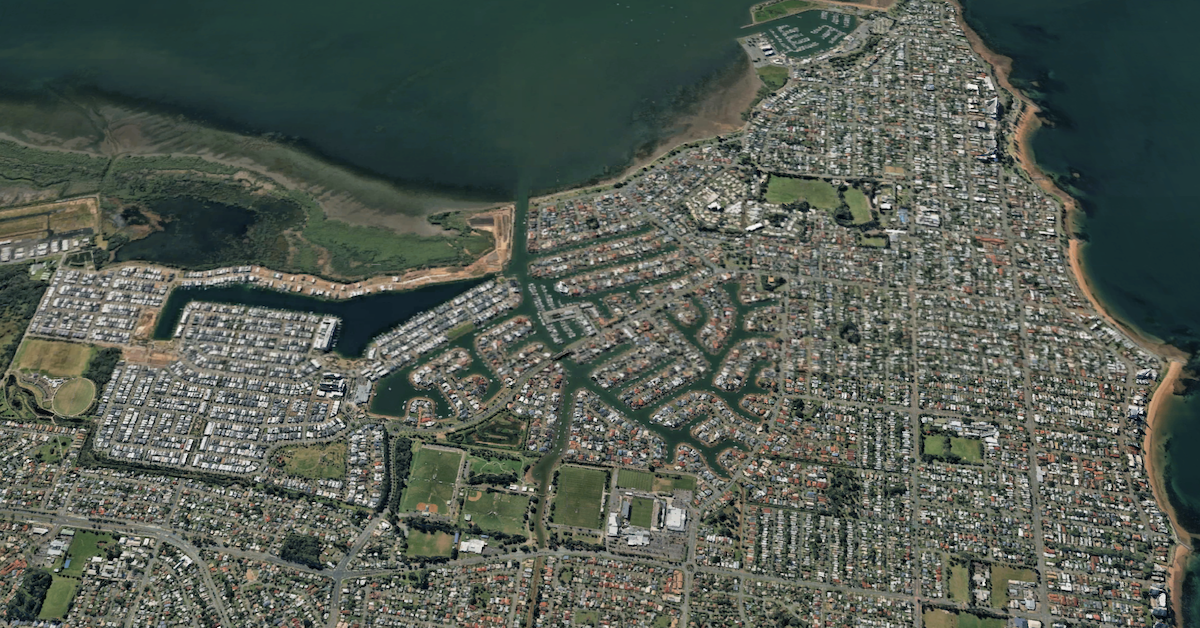
Newport sits beside a wetland system that hosts tens of thousands of migratory shorebirds each year — birds that have travelled up to 11,000 kilometres — raising a pressing question for locals: can a fast-growing waterfront community share space with one of Australia’s most important wildlife habitats?
A Canal Community Takes Shape on the Peninsula
Newport has grown into one of the City of Moreton Bay’s newest waterfront suburbs, built around a network of canals that connect residents directly to Deception Bay and the wider Moreton Bay system. Established in 2008 from parts of Scarborough and Kippa-Ring, the suburb was designed as a residential canal estate with boating access at its centre, according to the City of Moreton Bay and its local history records.
Public spaces like Spinnaker Park reflect that identity, with open lawns, water views and family facilities drawing residents outdoors. Council planning documents show ongoing maintenance of the waterways is required to keep channels navigable and usable for the growing number of residents who rely on them for recreation and access to the bay, as outlined in the Newport Waterways Long-Term Maintenance Plan.
The appeal is clear. Families, retirees and sea-changers are drawn to Newport for its coastal setting and connection to the water. But that same connection places the suburb beside a globally significant ecological system.
Moreton Bay’s Role in a Global Migration Route
The waters and mudflats surrounding the peninsula form part of Moreton Bay, a wetland recognised internationally under the Ramsar Convention. The Department of Climate Change, Energy, the Environment and Water reports the bay meets all nine criteria for international importance, supporting large populations of migratory shorebirds each year, as detailed on its Moreton Bay Ramsar site page.
Organisations such as Moreton Bay Foundation and Healthy Land & Water have documented how species travel vast distances along the East Asian–Australasian Flyway to reach feeding grounds in the bay. Some birds arrive after journeys of thousands of kilometres, relying on the area’s tidal flats to rebuild energy reserves, as explained by the Moreton Bay Foundation and supported by research from Healthy Land & Water.
Research highlighted by the East Asian–Australasian Flyway Partnership shows that species like the far eastern curlew depend on sites like Moreton Bay during the non-breeding season, making the region critical to their survival.
Feeding Grounds and Roosting Sites Under Pressure
For shorebirds, survival depends on a balance between feeding and rest. They forage on exposed mudflats at low tide, then move to nearby roosting sites when the tide rises. Environmental groups say even small disturbances — such as people approaching too closely, unleashed dogs or repeated boat traffic — can force birds to take flight and lose valuable energy.
Information from the Queensland Parks and Wildlife Service notes that repeated disturbance can reduce feeding time and affect migration success. In a system where birds must refuel quickly before continuing long journeys, that energy loss can have lasting effects.
While Newport itself is not identified as a primary shorebird hotspot, it sits near areas such as Deception Bay and Hays Inlet, which provide important habitat across the peninsula. This places everyday local activity within a broader ecological network, supported by regional studies such as the shorebirds in Moreton Bay resource.
Balancing Growth With Coastal Stewardship
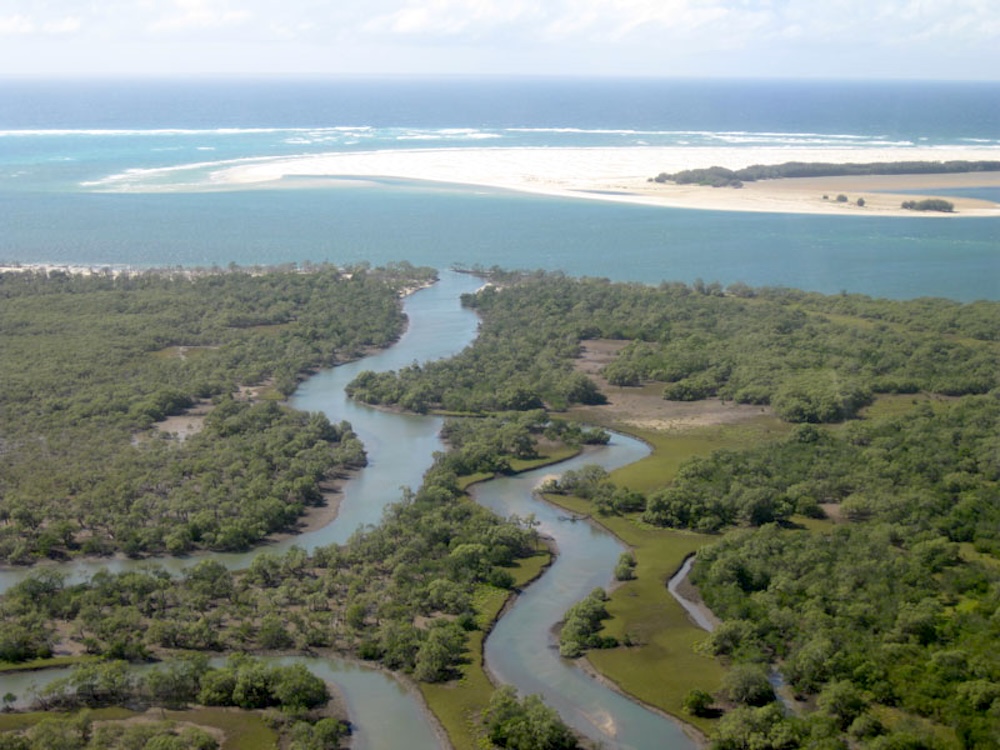
As Newport continues to grow, the question is how a waterfront suburb can function alongside sensitive habitat. The peninsula’s development has brought increased use of foreshore areas, waterways and nearby mudflats, all of which are also used by wildlife.
Environmental programs led by groups such as Healthy Land & Water and monitoring efforts linked to the Port of Brisbane highlight the importance of managing human activity across the bay, not just in designated conservation zones, including initiatives like the Port of Brisbane migratory shorebird monitoring program and broader regional work by Land for Wildlife South East Queensland.
Local government and conservation organisations emphasise practical measures that reduce impact, including maintaining distance from roosting birds and managing pets near coastal areas. These actions are presented as part of broader efforts to protect the ecological value of the bay while allowing communities to continue using the coastline.
A Shared Future on the Waterfront
Across the Redcliffe Peninsula, including nearby Scarborough, planning for coastal use continues to evolve, with projects such as the Scarborough Boat Harbour upgrade aiming to improve access and public space while supporting marine activity.
Newport’s position offers both opportunity and responsibility. Its canals and parks bring residents closer to the water, while the surrounding bay connects them to a migration route that spans continents.
Updated 1-September-2026